ADP Employment Report
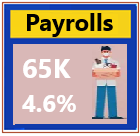
U.S. economy added 534,000 private-sector jobs in November, ADP says. Private payrolls increased by 534,000 for November, better than the Dow Jones estimate of 506,000, according to ADP. Leisure and hospitality saw a gain of 136,000, part of the 424,000 positions added in the services sector. Companies employing 500 or more added 277,000 for the month, with growth especially strong in those with 1,000 or more workers, which contributed 234,000.
ISM Manufacturing index for Nov. 2021
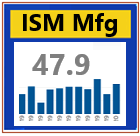
Manufacturing PMI at 61.1%; November 2021 Manufacturing ISM Report On Business. The November Manufacturing PMI® registered 61.1 percent, an increase of 0.3 percentage point from the October reading of 60.8 percent. This figure indicates expansion in the overall economy for the 18th month in a row after a contraction in April 2020. The New Orders Index registered 61.5 percent, up 1.7 percentage points compared to the October reading of 59.8 percent.
Construction Spending
U.S. construction spending rebounded less than expected in October as a decline in homebuilding blunted a surge in outlays on public projects. The Commerce Department said on Wednesday that construction spending gained 0.2% after dipping 0.1% in September. Economists polled by Reuters had forecast construction spending rising 0.4%. Construction spending increased 8.6% on a year-on-year basis in September.
Mortgage
Mortgage rates rose decisively again for most of last week, causing a massive drop in mortgage demand, but late in the week everything changed with the news of the Covid omicron variant. Last week the average rate on the 30-year mortgage with conforming loan balance ($548,250 or less) increased to 3.31% from 3.24%, with points rising to 0.43 from 0.36 (including the origination fee) for loans with a 20% down payment, according to the Mortgage Bankers Association. That is the highest rate since April of this year. The rate was 39 basis points lower one year ago.
Factory Orders
New orders for U.S.-made goods increased more than expected in October and businesses spending on equipment appeared to rebound after declining in the third quarter. The Commerce Department said on Friday that factory orders increased 1.0% in October. Data for September was revised higher to show orders gaining 0.5% instead of 0.2% as previously reported. Economists polled by Reuters had forecast factory orders rising 0.5%.
Orders increased surged 17.1% on a year-on-year basis. Manufacturing, which accounts for 12% of the economy, is being driven by still-strong demand for goods despite spending shifting back to services. Businesses are rebuilding depleted inventories, but shortages of labor and raw materials stemming from the COVID-19 pandemic remain challenges. An Institute for Supply Management survey on Wednesday showed manufacturing activity picked up in November, noting "some indications of slight labor and supplier delivery improvement."
ISM Non Manufacturing Index
In November, the Services PMI® registered 69.1 percent, a 2.4-percentage point increase compared to the October figure of 66.7 percent. This is the highest reading since the inception of the index in 2008. The 12-month average is 62.1 percent, which reflects strong and sustained demand in the services sector. The November reading indicates the services sector grew for the 18th consecutive month after two months of contraction and 122 months of growth before that. A reading above 50 percent indicates the services sector economy is generally expanding; below 50 percent indicates the services sector is generally contracting. A Services PMI® above 49.2 percent, over time, generally indicates an expansion of the overall economy. Therefore, the November Services PMI® indicates expansion for a 18th straight month following two months of contraction and a preceding period of 127 months of growth. Nieves says, "The past relationship between the Services PMI® and the overall economy indicates that the Services PMI® for November (69.1 percent) corresponds to a 6.9-percent increase in real gross domestic product (GDP) on an annualized basis."
PMI Composite Final Nov. 2021
November PMI Composite final print inches marginally higher, comes in above consensus. Fri, Dec. 03, 2021. November U.S. PMI Composite Index (Final): 57.2 vs. 56.5 consensus and 57.6 prior. The upturn in new business was solid midway through Q4 amid a strong expansion in services new orders; foreign client demand signaled a renewed rise. Despite employment rising at the fastest pace since June, firms continued to struggle to work through backlogs of work, which rose at the second-fastest pace on record. The rate of growth in backlogs of work softened, but it was the third-steepest on record. Service Index: 58 vs. 57 consensus, 58.7 prior.Although the pace of expansion was stronger than the series average of 54.8, it was subdued in comparison to rates seen through 2021 so far.
Consumer Confidence for Nov. 2021
The Conference Board Consumer Confidence Index declined in November 2021, following an increase in October. The Index now stands at 109.5 (1985=100), down from 111.6 in October. The Present Situation Index—based on consumers’ assessment of current business and labor market conditions—fell to 142.5 from 145.5 last month. The Expectations Index—based on consumers’ short-term outlook for income, business, and labor market conditions—fell to 87.6 from 89.0.
Expectations about short-term growth prospects ticked up, but job and income prospects ticked down. Concerns about rising prices—and, to a lesser degree, COVID-19 —were the primary drivers of the slight decline in confidence. However, the cutoff date for this month’s survey occurred prior to news of the Omicron variant. This month’s survey also showed that the proportion of consumers planning to purchase homes, automobiles, and major appliances over the next six months decreased. While the Conference Board expects this to be a good holiday season for retailers and confidence levels suggest the economic expansion will continue into early 2022 there may be mounting downside risks to this outlook associated with rising prices and a potential resurgence of COVID-19.
PMI Manufacturing Final Nov. 2021
IHS Markit final November U.S. manufacturing PMI drops to 58.4 vs initial 59.1. Dec. 1, 2021
Jobless Claims
Jobless claims less than expected as labor market returns to pre-pandemic self. Jobless claims for the week ended Nov. 27 totaled 222,000 vs. the Dow Jones estimate of 240,000. That was higher than the 194,000 from the previous week, which was the lowest total since 1969. Continuing claims dropped below 2 million for the first time since the early days of the pandemic.
Employment Situation
Job growth disappoints in November, with a gain of just 210,000, despite high hopes. Nonfarm payrolls increased by 210,000 in November, following a gain of 546,000 the previous month. The number was well below Wall Street expectations of 573,000. Despite the big hiring miss, the unemployment rate fell to 4.2%, a 0.4% percentage point decline that came even with rising labor force participation. Professional and business services and transportation and warehousing led gains, while hiring in leisure and hospitality was sluggish and retail lost jobs despite the traditional holiday hiring season.The U.S. economy created far fewer jobs than expected in November, in a sign that hiring started to slow even ahead of the new Covid threat, the Labor Department reported Friday. Nonfarm payrolls increased by just 210,000 for the month, though the unemployment rate fell sharply to 4.2% from 4.6%, even though the labor force participation rate increased for the month to 61.8%, its highest level since March 2020. The Dow Jones estimate was for 573,000 new jobs and a jobless level of 4.5% for an economy beset by a chronic labor shortage. A more encompassing measure of unemployment that includes discouraged workers and those holding part-time jobs for economic reasons dropped even more, tumbling to 7.8% from 8.3%. The household survey painted a brighter picture, with an addition of 1.1 million jobs as the labor force increased by 594,000.
U.S. Trade Balance
The U.S. Census Bureau and the U.S. Bureau of Economic Analysis announced today that the goods and services deficit was $67.1 billion in October, down $14.3 billion from $81.4 billion in September, revised..
US consumer credit $ 16.9 billion vs. an estimate of $ 24.9 billion. US consumer credit for October 2021. US consumer credit fell in October to $ 16.9 billion from $ 24.9 billion in investment. Last month, consumer credit increased by $ 27.28 billion (previously it was $ 29.91 billion). Revolving credit increased by $ 6.5 billion. Non-revolving credit increased by $ 10.32 billion..
S&P Corelogic Case-Shiller
The S&P CoreLogic Case-Shiller U.S. National Home Price NSA Index, covering all nine U.S. census divisions, reported a 19.5% annual gain in September, down from 19.8% in the previous month. The 10-City Composite annual increase came in at 17.8%, down from 18.6% in the previous month. The 20-City Composite posted a 19.1% year-over-year gain, down from 19.6% in the previous month. Phoenix, Tampa, and Miami reported the highest year-over-year gains among the 20 cities in September. Phoenix led the way with a 33.1% year-over-year price increase, followed by Tampa with a 27.7% increase and Miami with a 25.2% increase. Six of the 20 cities reported higher price increases in the year ending September 2021 versus the year ending August 2021.
Before seasonal adjustment, the U.S. National Index posted a 1.0% month-over-month increase in September, while the 10-City and 20-City Composites both posted increases of 0.7% and 0.8%, respectively. After seasonal adjustment, the U.S. National Index posted a month-over-month increase of 1.2%, and the 10-City and 20-City Composites both posted increases of 0.8% and 1.0%, respectively. In September, 19 of the 20 cities reported increases before seasonal adjustments while all 20 cities reported increases after seasonal adjustments..
Home price gains slow down for the first time since May 2020. Home prices rose 19.5% in September year over year, down from a 19.8% annual gain in August, according to the S&P CoreLogic Case-Shiller National Home Price Index. The 10-city composite rose 17.8% from a year ago, down from an 18.6% gain in August. The 20-city composite gained 19.1% year over year, down from 19.6% in the previous month. Cities with the highest price increases were Phoenix, Tampa, Florida, and Miami. Home prices are still considerably higher than they were a year ago, when the pandemic caused a massive run on housing, but the gains are finally starting to ease up. Home prices rose 19.5% in September year over year, down from a 19.8% annual gain in August, according to the S&P CoreLogic Case-Shiller National Home Price Index. That is the first decrease in the annual gain since May 2020. The 10-city composite rose 17.8% from a year ago, down from an 18.6% gain in August. The 20-city composite gained 19.1% year over year, down from 19.6% in the previous month..
Beige Book
Fed’s ‘Beige Book’ Finds Economy Growing at ‘Modest to Moderate’ Pace. The economy, while growing, is being held back by supply-chain disruptions. The Federal Reserve Board’s survey of regional economic conditions found the economy growing at a “modest to moderate pace” amid supply-chain constraints, according to its “beige book” released Wednesday. The report, an eight-times-a-year survey of the 12 regional banks within the Fed’s system, was slightly more bullish than the previous release in October, when some districts recorded a slowdown in growth, and echoes comments Fed Chairman Jerome Powell made this week in testimony to Congress.
That outlook has led the Fed to begin “tapering” its $120-billion-per-month purchases of Treasuries and mortgage-backed bonds that have been in place since the coronavirus first hit America in early 2020. It also has Powell and others withdrawing their previous description of the sharpest rise in inflation since the 1990s as “transitory.”..
FHFA Sep. 2021
The home price index is calculated using purchase prices of houses financed with mortgages that have been sold to or guaranteed by Fannie Mae or Freddie Mac. U.S. Federal Housing Finance Agency home price index: 17.7% Year to Year.
Pending Home Sales
Buyers came roaring back to the housing market in October, even as mortgage rates rose. Signed contracts on existing homes, so-called pending sales, jumped 7.5% from September, according to the National Association of Realtors. Sales were still 1.4% lower than October 2020, but last fall marked a cyclical high in the housing market. Pending sales are a forward-looking indicator of sales that will close in one to two months. Wall Street analysts were expecting October pending sales to be flat compared with the month before.
ISM Services - Non Manufacturing Index
The ISM Non-Manufacturing PMI for the US jumped to 69.1 in November 2021 from 66.7 in the previous month, easily beating market expectations of 65 and indicating the fastest pace of expansion in the services sector since the series began in 1997.
Consumer Credit
US consumer borrowing accelerates strongly in September. Consumer credit growth accelerated in September, according to Federal Reserve data released Friday. Total consumer credit rose 8.3 percent, at a seasonally-adjusted, annualized rate, in September and is up 4.9 percent compared to a year ago. Revolving credit, primarily credit cards, rose 11.8 percent during the month and is up 2.7 percent compared to September 2020. |