|
Empire State Manufacturing Index
The New York Fed’s Empire State business conditions index rose 8.6 points to 12.1 in February, the regional Fed bank said Tuesday. This is the highest level of activity since July. Economists had expected a reading of 5.9, according to a survey by the Wall Street Journal. Any reading above zero indicates improving conditions.
The new orders index rose 4.2 points to 10.8 in February, while shipments fell 3.3 points to 4. Unfilled orders rose 8.1 points to 2.6 in February.
Treasury International Capital (TIC)
The U.S. Department of the Treasury today released Treasury International Capital (TIC) data for December 2020. The sum total in December of all net foreign acquisitions of long-term securities, short-term U.S. securities, and banking flows was a net TIC outflow of $0.6 billion. Of this, net foreign private inflows were $25.5 billion, and net foreign official outflows were $26.1 billion. Foreign residents increased their holdings of long-term U.S. securities in December; net purchases were $97.4 billion. Net purchases by private foreign investors were $86.0 billion, while net purchases by foreign official institutions were $11.4 billion. U.S. residents decreased their holdings of long-term foreign securities, with net sales of $23.5 billion. Taking into account transactions in both foreign and U.S. securities, net foreign purchases of long-term securities were $121.0 billion. After including adjustments, such as estimates of unrecorded principal payments to foreigners on U.S. asset-backed securities, overall net foreign purchases of long-term securities are estimated to have been $76.2 billion in December. Foreign residents increased their holdings of U.S. Treasury bills by $3.2 billion. Foreign resident holdings of all dollar-denominated short-term U.S. securities and other custody liabilities increased by $4.0 billion. Banks’ own net dollar-denominated liabilities to foreign residents decreased by $80.7 billion.
Retail Sales
Retail sales burst higher in January 2021 as consumers use stimulus checks to spend heavily. Retail sales jumped 5.3% to start 2021, well ahead of the 1.2% expectation.The big move came as millions of consumers received $600 stimulus checks.Every major category of spending, including food and drinking establishments, saw gains.
Producer Price Index PPI
U.S. producer prices increased by the most since 2009 in January as the cost of goods and services surged, suggesting inflation at the factory gate was starting to creep up. The producer price index for final demand jumped 1.3% last month, the biggest gain since December 2009 when the government revamped the series, the Labor Department said on Wednesday. The cost of goods surged 1.4% after gaining 1.0% in December. Economists polled by Reuters had forecast the PPI would rise 0.4% in January and gain 0.9% on a year-on-year basis. Inflation is under focus this year amid concerns from some quarters that President Joe Biden’s $1.9 trillion recovery plan could lead to the overheating of the economy.
The package, which would follow on the heels of nearly $900 billion in additional COVID-19 pandemic relief from the government in late December, is working its way thorough the U.S. Congress. Higher inflation is anticipated by the spring as price declines early in the coronavirus crisis wash out of the calculations, but there is no consensus among economists on whether it would stick beyond the so-called base effects.
Industrial Production
American industry expanded for the fourth consecutive month in January 2021, but it has yet to return to the level of activity that preceded the pandemic.
U.S. industrial production — which includes output factories, mines and utiliites — rose 0.9% last month on top of increases of 1.3% in December, 0.9% in November and 1.1% in October, the Federal Reserve reported Wednesday. Still, industrial production was down 1.8% from January 2020, reflecting lingering economic damage from the coronavirus pandemic. While the January 2021 activity was greater than most economists had projected, it was 1.8% below production in January 2020, reflecting lingering economic damage from the coronavirus pandemic.
Housing Market Index - HMI
Builder sentiment rose one point to 84 in February according to the latest National Association of Home Builders/Wells Fargo Housing Market Index (HMI) released Wednesday. Anything above 50 is considered positive sentiment.
While home prices are a concern in both the new and existing home markets, there appears to be very little pullback in buyer demand.
Current sales conditions held steady at 90, and traffic of prospective buyers rose four points to 72.
MBA
Mortgage demand falls further as rates rise at the fastest pace in months
The average contract interest rate for 30-year fixed-rate mortgages increased to 2.98% from 2.96% last week.
Total mortgage application volume fell 5.1% last week from the previous week, according to the Mortgage Bankers Association.
Applications to refinance a home loan fell 5% for the week.
Mortgage applications to purchase a home fell 6% for the week.
Household debt rises to $14.6 trillion due to record-breaking rise in mortgage loans Consumer debt totaled $14.6 trillion at the end of 2020, rising 1.4% in the fourth quarter.
The increase came largely due to a record-breaking rise in mortgage debt, which now totals more than $10 trillion.
Student loan debt saw a modest increase in 2020 amid a surge in forbearance programs.
Business Inventories
U.S. business inventories increased solidly in December 2020, with stocks at retailers larger than initially estimated.
Business inventories rose 0.6% in December after gaining 0.5% in November, the Commerce Department said on Wednesday. Inventories are a key component of gross domestic product.
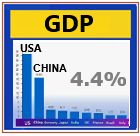
The economy grew at a 4.0% annualized rate in the fourth quarter after a historic 33.4% growth pace in the third quarter. Inventories contributed to GDP growth for two straight quarters.
U.S. Business Inventories Rise in December 2020. Business inventories in the United States rose more than expected during December 2020, data showed on Wednesday. U.S. business inventories increased by 0.6% in December, after rising by 0.5% in November, according to data by the U.S. Department of Commerce. On an annual basis, business inventories declined by 2.6% in December 2020. Retail inventories leveled up by 1.2% in December, while motor vehicle inventories increased 1.1%. Meanwhile, wholesale inventories grew by 0.3%...
FOMC Minutes for Meeting 27/Jan/2021
Minutes from the January 2021 Fed meeting showed that officials see the economy “far from” the central bank’s goals.
Those objectives include a “broad and inclusive” labor market recovery and inflation up to at least 2%.
The meeting summary said it likely will “take some time for substantial further progress to be achieved,” meaning policy is unlikely to change soon. Fed officials see economy ‘far from’ where it needs to be, meaning easy policy won’t change soon, minutes show. Minutes from the January Fed meeting showed that officials see the economy “far from” the central bank’s goals. Those objectives include a “broad and inclusive” labor market recovery and inflation up to at least 2%. The meeting summary said it likely will “take some time for substantial further progress to be achieved,” meaning policy is unlikely to change soon. Federal Open Market Committee members at their most recent gathering reaffirmed that the central bank will be keeping policy loose well into the future, according to meeting minutes released Wednesday. With the economy continuing to shake off the effects from the Covid-19 pandemic, the committee, which sets monetary policy for the Federal Reserve, kept policy unchanged. That meant holding benchmark short-term borrowing rates near zero and maintaining the minimum $120 billion of asset purchases each month. In a discussion over the Fed’s asset purchase program and interest rate policy, the minutes indicated little chance for a change anytime soon.
Jobless Claims
U.S. stocks slid on Thursday as investors were discouraged by a worse-than-expected jobless claims reading as well as a gloomy forecast from Walmart.
The Dow Jones Industrial Average fell 220 points. The S&P 500 fell 0.8%, while the Nasdaq Composite slipped 1.2% as investors continued to rotate out of high-flying tech.
First-time filings for unemployment insurance totaled 861,000 last week, the highest level in a month and above the Dow Jones estimate of 773,000, the Labor Department reported Thursday.
Housing Permits
A separate report Thursday saw January housing starts fall 6%, more than expected, but building permits surged 10.4%, easily above Wall Street estimates.
U.S. homebuilding fell more than expected in January amid soaring lumber prices, though a surge in permits for future construction suggested the housing market remains supported by lean inventories and historically low mortgage rates.
Housing Starts
Housing starts decreased 6.0% to a seasonally adjusted annual rate of 1.580 million units last month, the Commerce Department said on Thursday. Economists polled by Reuters had forecast starts would drop to a rate of 1.658 million units in January. Homebuilding fell 2.3% on a year-on-year basis.
Permits for future homebuilding shot up 10.4% to a rate of 1.881 million units in January. Permits typically lead starts by one to two months.
Philadelphia Fed Manufacturing Index
Momentum in the U.S. manufacturing sector remains steady as the Philadelphia region saw resilient activity in February 2021, according to the latest report from the Philadelphia Federal Reserve. Thursday, the regional central bank said its manufacturing business outlook fell to a reading of 23.1 in February, down from the January reading of 26.5. However, data beat expectations as consensus forecasts were calling for a reading around 20.3. "Responses to the February Manufacturing Business Outlook Survey suggest continued expansion for the region's manufacturing sector. The indicators for current activity, new orders, and shipments fell slightly from last month but remained elevated," the report said. The gold market is seeing little reaction to the better-than-expected Philly Fed data. April gold futures last traded at $1,781.0 an ounce, up nearly 0.5% on the day.
Import and Export Prices
U.S. import prices increased by the most in nearly nine years in January 2021, lifted by higher prices for energy products and a weak dollar, supporting expectations for an acceleration in inflation in the coming months.
The Labor Department said on Thursday import prices jumped 1.4% last month, the biggest gain since March 2012, after increasing 1.0% in December.
Export prices increased 2.3% on a year-on-year basis in January, after rising 0.4% in December.
U.S. import prices increased 1.4% in January, biggest gain since 2012, lifted by higher prices for energy products and a weak dollar. U.S. import prices increased by the most in nearly nine years in January, lifted by higher prices for energy products and a weak dollar, supporting expectations for an acceleration in inflation in the coming months. The Labor Department said on Thursday import prices jumped 1.4% last month, the biggest gain since March 2012, after increasing 1.0% in December. Export prices increased 2.3% on a year-on-year basis in January, after rising 0.4% in December. Economists polled by Reuters had forecast import prices, which exclude tariffs, gaining 1.0% in January. In the 12 months through January, import prices rebounded 0.9% after slipping 0.3% in December. That was the biggest year-on-year gain since October 2018 and followed 11 straight monthly declines. The report also showed export prices surged 2.5% in January, the largest rise since the index was first published on a monthly basis in December 1988, after increasing 1.3% in December. Prices for agricultural exports rose 6.0%, while nonagricultural exports increased 2.2%. Export prices increased 2.3% on a year-on-year basis in January, after rising 0.4% in December.
Mortgage Rates
Mortgage rates flew to the highest level since mid-November this week — a worrying sign for home buyers navigating a market defined by fast-rising home prices. The 30-year fixed-rate mortgage averaged 2.81% for the week ending Feb. 18, up eight basis points from the week prior.
PMI Composite Flash
The flash reading of the IHS Markit U.S. composite purchasing managers index rose to 58.8 in February 2021 from 58.7 in the prior month. Any reading over 50 indicates improving conditions. It is the strongest reading in almost six years. What happened: The index for services rose to 58.9 in February from 58.3 in the prior month. Economists polled by the Wall Street Journal were expecting a 58 reading. The index for the U.S. manufacturing sector, fell to 58.5 from 59.2. Economists had forecast a 59 reading. Big picture: The economy is starting to pick up speed as COVID-19 cases are declining and more people are being vaccinated.
Existing home sales rise slightly in January, but record low supply weighs on market
After a brief pullback in December, homebuyers returned to the market, although they are still being hampered by record low supply.
Closed sales of existing homes in January increased 0.6% compared with December, according to the National Association of Realtors.
There were 1.04 million homes for sale at the end of January, a 26% drop from a year ago
Existing Home Sales
Existing-Home Sales Tick Up 0.6% in January. Existing-home sales continued to increase in January to a seasonally-adjusted annual rate of 6.69 million, up 0.6% from the prior month and 23.7% from one year ago. The median existing-home sales price rose to $303,900, 14.1% higher from one year ago. As of the end of January, housing inventory fell to a record-low of 1.04 million units, down by 25.7% year-over-year – a record decline. |