10-Year Treasury Yield
U.S. Treasury yields were mixed on Monday, as investors awaited key inflation data and fretted over the potential impact on future Federal Reserve monetary policy decisions. The yield on the 10-year Treasury was down by 2 basis points at 3.723%. The 2-year Treasury yield, meanwhile, gained 3 basis points to trade at 4.543%. Yields and prices move in opposite directions, and one basis point is equivalent to 0.01%.
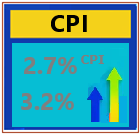
CPI Inflation rose 0.5% in January, more than expected and up 6.4% from a year ago. Inflation rose in January by 0.5% following a 0.1% increase in December, according to the consumer price index report released Tuesday. The CPI was up 6.4% from the same period in 2022. Both numbers were higher than expected Across-the-board increases in shelter, food and energy boosted the index after inflation had shown signs of receding in recent months “Super core” services inflation, which is key for the Fed and excludes food, energy and shelter, rose 0.2% for the month and was 4% higher than a year ago. The consumer price index, which measures a broad basket of common goods and services, rose 0.5% in January, which translated to an annual gain of 6.4%. Economists surveyed by Dow Jones had been looking for respective increases of 0.4% and 6.2%. Excluding volatile food and energy, the core CPI increased 0.4% monthly and 5.6% from a year ago, against respective estimates of 0.3% and 5.5%
MBA Purchase Applications
After falling for five straight weeks, mortgage rates jumped last week, triggering a decline in mortgage demand. Total mortgage application volume fell 7.7% last week, compared with the previous week, according to the Mortgage Bankers Association’s seasonally adjusted index. The average contract interest rate for 30-year fixed-rate mortgages with conforming loan balances ($726,200 or less) increased to 6.39% from 6.18%, with points rising to 0.70 from 0.64 (including the origination fee) for loans with a 20% down payment. The rate was 4.05% one year ago. “Mortgage rates increased across the board last week, pushed higher by market expectations that inflation will persist, thus requiring the Federal Reserve to keep monetary policy restrictive for a longer time,” said Joel Kan, MBA’s vice president and deputy chief economist. Applications to refinance a home loan dropped 13% for the week and were 76% lower than the same week one year ago. At the current rate, 100,000 fewer borrowers can benefit from a refinance compared with just one week ago, according to data from Black Knight. A year ago, with mortgage rates at 4.05%, there were just under 4 million refinance candidates.
Retail Sales
Retail sales jump 3% in January, smashing expectations despite inflation increase. Retail sales rose 3% in January, easily topping the 1.9% Dow Jones estimate, the Commerce Department reported Wednesday. Sales at retailers rose far more than expected in January as consumers persevered despite rising inflation pressures. Advance retail sales for the month increased 3%, compared to expectations for a rise of 1.9%, the Commerce Department reported Wednesday. Excluding autos, sales increased 2.3%, according to the report, which is not adjusted for inflation. The ex-autos estimate was for a gain of 0.9%. Food services and drinking places surged 7.2% to lead all major categories. Motor vehicle and parts dealers increased 5.9%,while furniture and home furnishing stores saw an increase of 4.4%. Even with a 2.4% increase in gas prices, receipts at service stations were flat. Online retailers saw an increase of 1.3%, while electronics and appliances stores increased 3.5%.
Empire State Manufacturing Index
Empire State Manufacturing Survey: Activity Continues to Decline in February. This morning we got the latest Empire State Manufacturing Survey. The diffusion index for General Business Conditions climbed 27.1 points from last month but remained negative at -5.8. This morning's reading exceeded the Investing.com forecast of -18.0. The Empire State Manufacturing Index rates the relative level of general business conditions in New York state. A level above 0.0 indicates improving conditions, and below indicates worsening conditions. The reading is compiled from a survey of about 200 manufacturers in New York state. This month's responses were collected between February 2-9th.
Industrial Production
U.S. industrial production stagnated in January weighed by lower utilities output, but the key manufacturing sector rebounded from the falls recorded at year-end. Industrial production--which comprises manufacturing, mining and utility output--was unchanged in January after a revised 1% drop in December, data from the Federal Reserve showed Wednesday. The reading misses the 0.4% expansion expected by economists in a poll from The Wall Street Journal. The U.S. manufacturing sector lost momentum at the end of 2022 as high interest rates hit new demand for goods both domestically and globally. Economists don't expect the situation to improve significantly in the short-term as the drag from higher borrowing costs intensifies. Capacity utilization, which reflects how much industries are producing compared with what they could potentially produce, decreased marginally to 78.3% in January from 78.4% the prior month.
Business Inventories
U.S. business inventories rose moderately in December as businesses carefully managed stocks amid slowing demand, with the inventory-to-sales ratio hitting a two-year high. Business inventories increased 0.3% after climbing by the same margin in November, the Commerce Department said on Wednesday. Inventories are a key component of gross domestic product. December's gain was in line with economists' expectations. Inventories increased 12.7% on a year-on-year basis in December. Inventory accumulation surged in the fourth quarter, mostly reflecting an unwanted piling up of goods, as higher borrowing costs contributed to the slowest pace of growth in domestic demand in 2-1/2 years. The Federal Reserve has raised its policy rate by 450 basis points since last March from near zero to a 4.50%-4.75% range, with the bulk of the increases between May and December. Two additional rate hikes of 25 basis points are expected in March and May.
HMI
With the largest monthly increase for builder sentiment since June 2013, the HMI indicates that incremental gains for housing affordability have the ability to price-in buyers to the market, America’s homebuilders are growing more bullish as buyer demand picks up, driven in part by slightly lower mortgage rates. Homebuilder confidence in the market for newly built single-family homes in February rose seven points to 42, according to the National Association of Home Builders/Wells Fargo Housing Market Index. This is the highest reading since September and the largest monthly gain since June 2013. Anything below 50 is considered negative, but sentiment had fallen to 31 in December. The index stood at 81 in February of last year, before mortgage rates began to rise. Builders say affordability is improving, as mortgage rates fall back from their highs of last fall and start to settle in a narrow range. The average rate on the popular 30-year fixed mortgage had peaked at 7.37% last October, according to Mortgage News Daily but spent much of January in the low 6% range. Rates have moved up slightly in the past two weeks to the mid-6% range.
Jobless Initial Claims
U.S. jobless claims stay below 200,000 for fifth straight week. The number of Americans filing new claims for unemployment benefits unexpectedly fell last week, offering more evidence of the economy's resilience despite tighter monetary policy. Other data on Thursday showed monthly producer prices increasing by the most in seven months in January as the cost of energy products surged. Even stripping out energy and other volatile components, underlying producer inflation rose at its fastest pace since last March. The reports, which followed data this week showing robust growth in retail sales in January and an acceleration in monthly consumer prices, further stoked financial market fears that the Federal Reserve could maintain its interest hiking campaign through summer.
Housing Starts
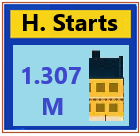
U.S. housing starts fall by 4.5% in January to the lowest level since June 2020. Single-family housing starts, which account for the bulk of U.S. homebuilding, dropped 4.3% to a seasonally adjusted annual rate of 841,000 units in January, the Commerce Department said in a fourth report. Starts for housing projects with five units or more fell 5.4% to a rate of 457,000 units. Overall, housing starts dropped 4.5% to a rate of 1.309 million units, the lowest level since June 2020. Single-family building permits fell 1.8% to a 718,000-unit pace.
Building Permits
Building permits, which track the number of new housing units granted permits, rose slightly in January, up 0.1% from the revised December rate, and were down 27.3% from a year ago. In January building permits were at a seasonally adjusted annual rate of 1.339 million
U.S. single-family homebuilding fell in January, but an easing in mortgage rates and improvement in homebuilder confidence suggested the recession-hit housing market was close to finding a floor. Single-family housing starts, which account for the bulk of homebuilding, dropped 4.3% to a seasonally adjusted annual rate of 841,000 units last month, the Commerce Department said on Thursday. Single-family homebuilding tumbled 27.3% on a year-on-year basis in January. Last month, single-family homebuilding plunged in the Northeast and West, with the latter likely depressed by flooding in California. Starts rose in the densely populated South as well as the Midwest. Higher mortgage rates have pushed the housing market into recession. There are, however, signs that the worst of the housing market downturn is over. The sector has been the biggest causality of the Federal Reserve's aggressive interest rate hiking campaign.
Phily Fed
Manufacturing activity in the Mid-Atlantic region dropped off sharply and unexpectedly in February, and goods producers reported input cost increases accelerated for the first time in 10 months while their own price increases slowed dramatically, signaling margin pressures were building. The Philadelphia Federal Reserve's monthly manufacturing index plunged to -24.3 this month from -8.9 in January, belying expectations among economists for a third straight monthly improvement. The median estimate in a Reuters survey of economists was for -7.4, and the reading was more than twice as weak as the lowest estimate in the poll. Indexes tracking new orders, shipments, delivery times and employee headcount all weakened.Philadelphia Fed’s manufacturing gauge sinks in February to lowest since May 2020.
Retail Sales
U.S. retail sales roar back; manufacturing shows improvement. Retail sales increase 3.0% in January. Core retail sales rise 1.7%; December data unrevised. U.S. retail sales increased by the most in nearly two years in January after two straight monthly declines as Americans boosted purchases of motor vehicles and other goods, pointing to the economy's continued resilience despite higher borrowing costs. Coming on the heels of news on Tuesday that monthly inflation picked up last month, signs of strength in consumer spending could fuel financial market speculation that the Federal Reserve could continue raising interest rates through summer to cool domestic demand.
Fixed Mortgage Rates
The average contract interest rate for 30-year fixed-rate mortgages with conforming loan balances ($726,200 or less) increased to 6.39% from 6.18%, with points rising to 0.70 from 0.64 (including the origination fee) for loans with a 20% down payment. The rate was 4.05% one year ago.
Import and Export Prices U.S. import prices dropped for a seventh straight month in January amid declining costs for energy products, leading to the smallest annual increase in imported inflation in two years. The report from the Labor Department on Friday, however, did little to assuage financial market fears the Federal Reserve could maintain its interest hiking campaign through the summer after data this week showed a jump in monthly consumer and producer prices in January, suggesting a slow disinflation journey. Import prices fell 0.2% last month after slipping 0.1% in December. The drop in import prices, which exclude tariffs, was in line with economists' expectations. In the 12 months through January, import prices increased 0.8%. That was the smallest year-on-year gain since December 2020 and followed a 3.0% rise in December. Imported fuel prices dropped 4.9% after declining 4.4% in December. Petroleum prices fell 4.5%, while natural gas tumbled 11.2%. The cost of imported food surged 1.3%.
Leading Indicators
The U.S. economy is still headed toward recession this year, but the labor market and personal income remain robust, according to the Conference Board. The business organization’s leading economic index fell 0.3% in January, meeting expectations but that was less severe of a drop than the 0.8% seen in December. “The US LEI remained on a downward trajectory, but its rate of decline moderated slightly in January,” said Ataman Ozyildirim, senior director, economics, at the board. “Among the leading indicators, deteriorating manufacturing new orders, consumers’ expectations of business conditions, and credit conditions more than offset strengths in labor markets and stock prices to drive the index lower in the month.”
E-Commerce Retail Sales
The Census Bureau of the Department of Commerce announced today that the estimate of U.S. retail e-commerce sales for the fourth quarter of 2022, adjusted for seasonal variation, but not for price changes, was $262.0 billion, a decrease of 0.1 percent (±0.9%)* from the third quarter of 2022. Total retail sales for the fourth quarter of 2022 were estimated at $1,785.8 billion, a decrease of 0.3 percent (±0.4%)* from the third quarter of 2022. The fourth quarter 2022 e commerce estimate increased 6.5 percent (±1.1%) from the fourth quarter of 2021 while total retail sales increased 5.7 percent (±0.2%) in the same period. E-commerce sales in the fourth quarter of 2022 accounted for 14.7 percent of total sales.
Consumer debt hits record $16.9 trillion as delinquencies also rise. Consumer debt across all categories totaled $16.9 trillion, up about $1.3 trillion from a year ago as balances rose across all major categories. Mortgages, auto loans and credit card delinquencies all increased, though to still-low levels. The rise in balances came amid an aggressive rate-hiking campaign by the Fed.
|