10-Year Treasury Yield
The yield on the 10-year Treasury surged Friday as investors assessed a strong nonfarm payrolls number for May that fueled concerns that the Federal Reserve may not cut rates as soon as expected. The yield on the 10-year Treasury jumped 14 basis points to 4.422%. The 2-year Treasury yield was last at 4.862% after rising by 14 basis points. Yields and prices have an inverted relationship. One basis point equals 0.01%.
Factory Orders
US factory orders increased 0.7% in April, in line with market estimates, according to Commerce Department figures released Tuesday. New orders for manufactured goods, which measure the change in the value of new purchase orders placed with manufacturers, climbed $4.3 billion to reach $588.2 billion, rising for three consecutive months. The figure in March was revised down from a gain of 1.6% to an increase of 0.7% to stand at $584 billion.New orders for manufactured durable goods in April rose $1.8 billion, or 0.6%, to $283.9 billion – also up for three consecutive months. Transportation equipment led the increase with a gain of $1 billion, or 1.1%, to reach $96 billion. New orders for manufactured nondurable goods increased $2.4 billion, or 0.8%, to $304.3 billion.
ADP Employment Report
Private payrolls growth slows to 152,000 in May, much less than expected, ADP says. ADP reported that companies added 152,000 jobs in May, fewer than the downwardly revised 188,000 in April and below the Dow Jones consensus estimate for 175,000. Nearly all the hiring came from the services sector, with goods producers contributing just a net 3,000 to the total. Trade, transportation and utilities led with 55,000 new jobs, while education and health services added 46,000, and construction contributed 32,000.
JOLTS
Job openings fell again in April, hitting lowest level since February 2021 in a sign of labor market weakening. Job openings in April slipped to 8.06 million, down by nearly 300,000 from March and the lowest since February 2021. While job openings slid, hires moved slightly higher as did separations and quits. The Labor Department’s Job Openings and Labor Turnover Survey released Tuesday showed that the level of employment vacancies slipped to 8.06 million for the month, down by nearly 300,000 from March and close to 19% lower than a year ago.
MBA Purchase Applications
nnnn
Jobless Claims
mmmm
Payroll Non Farm -
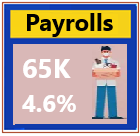
A slowing economy is just one reason to remain bullish on the overall market this year, Nonfarm payrolls increased by 272,000 in May, above the 190,000 estimate from Dow Jones and April’s 175,000. The unemployment rate increased to 4%. U.S. adds a much-better-than-expected 272,000 jobs in May, but unemployment rate edges up to 4%. Nonfarm payrolls expanded by 272,000 for the month, up from 165,000 in April and well ahead of the Dow Jones consensus estimate for 190,000. The unemployment rate rose to 4%, the first time it has breached that level since January 2022. Job gains were concentrated in health care, government, and leisure and hospitality, consistent with recent trends. Average hourly earnings were higher than expected as well, rising 0.4% on the month and 4.1% from a year ago.
Unemployment Rate
Jobless rates rise in May for all racial groups except white Americans. The unemployment rate rose for all racial groups except for white Americans in May. The uptick in jobless rates was more pronounced for Black men than women. Black men saw their unemployment rate jump to 6.4% from 5.2%. The number of eligible adults looking for jobs fell for white and Black workers, rose for Asian Americans and held steady for Hispanic workers.
ISM Manufacturing Index
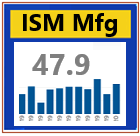
Economic activity in the U.S. manufacturing sector faced contraction for the second consecutive month in May 2024, marking the 18th time in the last 19 months. The Manufacturing PMI® dipped to 48.7 percent in May, down 0.5 percentage points from April’s 49.2 percent. This decline reflects a continued struggle, with the New Orders Index slipping further into contraction at 45.4 percent, indicating a softening demand.
Consumer Sentiment UM
mmm
Productivity and Costs
US productivity growth slowed in early 2024. Nonfarm productivity, which measures hourly output per worker, increased at a 0.2 per cent annualised rate in the first quarter, revised down from an initial estimate of 0.3 per cent one month ago. Economists polled by Reuters had estimated a revision down to 0.1 per cent. US worker productivity grew slightly less than previously estimated in the first quarter but exceeded market expectations, and unit labour costs rose by less than first thought, data from the Labor Department showed on Thursday (Jun 6), although the revision seems unlikely to allay Federal Reserve officials’ hesitance to turn to rate cuts in the near term.
Jobless Claims
mmm
PMI Composite Final
The S&P Global US Composite PMI rose to 54.5 in May 2024, up sharply from 51.3 in April and above a preliminary estimate of 54.4. This marks the strongest increase in business activity since April 2022, as growth accelerated in both manufacturing (PMI at 51.3 vs 50.3 in April) and services (PMI at 54.8 vs 51.3). Companies boosted output due to a renewed rise in new orders, following a slight decline in April, and new export business saw a marginal increase. Employment levels remained steady overall, with increased manufacturing jobs offset by lower staffing in services. Input costs and selling price inflation both accelerated. Business confidence improved slightly, with companies optimistic about future output growth.
International Trade Goods
mmmm
Retail Inv Adv
mmmmm
Wholesale Inv Adv
mmmmm
Personal Income
mmmm
Core PCE
mmm
Consumer Spending
mmm |