10-Year Treasury Yield
10-year Treasury yield climbs above 4.2%, 2-year yield tops 4% as traders debate rate-cut outlook. The U.S. 10-year Treasury yield was on the move higher again on Tuesday after Federal Reserve officials urged caution on the path of interest rate cuts. The yield on the 10-year Treasury rose nearly 2 basis points to 4.198%. Earlier Tuesday, it climbed above 4.2% for the first time in three months, after jumping 12 basis points on Monday. The yield on the 2-year Treasury was up more than 2 basis points to 4.052%, meanwhile.
Leading Indicators
U.S. economy poised for somewhat slower growth, leading indicators signal. Leading index declines again in September. The numbers: The leading indicators of the U.S. economy fell again in September because of weakness in a few key industries such as housing and manufacturing, but not enough to suggest any sign of major trouble. The leading index dropped 0.5% last month, the Conference Board said Monday. The gauge has fallen in almost every month since early 2022 even though the economy has continued to expand.
US Dollar
The dollar strengthened beyond 153 against the yen for the first time in nearly three months on Wednesday on an expected divergence among major global central banks’ pace of interest rate cuts. The greenback is on track for its 16th gain in 18 sessions and fourth straight week of gains as a run of positive economic data has dampened expectations about the size and speed of rate cuts from the Federal Reserve, which has pushed U.S. Treasury yields higher.
Geopolitical Risk
mmmm
MBA Purchase Applications
mmm
Existing Home Sales
Home sales fall 1.0% to 3.84 million units in September. Housing inventory up 1.5% to 1.39 million units. Median existing home price rises 3% from year-ago period. U.S. existing home sales dropped to a 14-year low in September, weighed down by higher mortgage rates and house prices. The second straight monthly decline in home resales reinforced economists' views that the slump in residential investment, which includes homebuilding, deepened in the third quarter. The housing market has struggled to rebound after being knocked down by a resurgence in mortgage rates in the spring. Though supply has improved, entry-level homes remain scarce in most regions of the country, keeping home prices at levels that are unaffordable for most first-time buyers. Home sales fell 1.0% last month to a seasonally adjusted annual rate of 3.84 million units, the lowest level since October 2010, the National Association of Realtors said on Wednesday. Economists polled by Reuters had forecast home resales would be unchanged at a rate of 3.86 million units.
Oil - Commodity
mmmm
Beige Book - FOMC
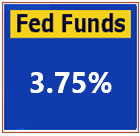
The last Beige Book pointed to decelerating economic growth with isolated strengths, a pattern likely to be repeated in October’s report. However, an upside surprise seems more likely given recent data has outperformed forecasts. The dollar index, which measures the U.S. currency against six others, was last up 0.11% at 104.18 after ticking up to 104.19, its highest since Aug. 2. The index is up more than 3% so far this month.Fed's 'Beige Book' shows inflation pressures moderating. U.S. economic activity was little changed from September through early October and firms saw a slight uptick in hiring, continuing recent trends that have reinforced expectations the Federal Reserve will opt for a smaller 25-basis-point reduction in borrowing costs in two weeks.
Jobless Claims
Jobless claims fall again as hurricane effects fade. Layoffs back to very low levels. The number of Americans who applied for unemployment benefits last week rose slightly to a minuscule 225,000, confirming that layoffs remain surprisingly low even though many companies have pulled the plug on hiring. Milton and Helene triggered temporary spike in unemployment
Chicago Fed Nat Activity Index
U.S. economic growth slipped back a little last month as Americans watch to see who will become their next president, according to a monthly index released Thursday. The Chicago Fed National Activity Index fell to minus 0.28 in September from minus 0.01 in August, the Federal Reserve Bank of Chicago said. A reading above zero is associated with better-than-average economic growth. All four categories that constitute the index made negative contributions. Production and employment fell back into negative territory over the month, while sales, orders & inventories remained negative. Personal consumption & housing also remained negative, though a little less so than in August. The index's three-month moving average declined to minus 0.19 from minus 0.14, adding to signs of a generally more sluggish trend in activity ahead of uncertain presidential elections due early in November. Periods of economic expansion have historically been associated with values of the CFNAI diffusion index above minus 0.35.The CFNAI diffusion index--which captures how much the change in the monthly index is spread among the indicators over three months--was meanwhile a little less negative, improving to minus 0.16 from minus 0.21 in August.
PMI Composite Flash
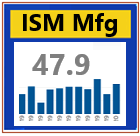
The flash US S&P Global October Composite PMI edged higher to 54.3 after printing at 54.0 final in September. Manufacturing activity improved to 47.8 from 47.3 in September, beating the anticipated 47.5. The services index printed at 55.3, up from 55.2 in the previous month and above the 55 forecast. "October’s flash US PMI survey signalled a further solid rise in business activity to mark a robust start to the fourth quarter. Growth was driven solely by the service sector, however, as manufacturing output contracted for a third month running. Meanwhile, employment fell slightly for a third successive month amid uncertainty ahead of the Presidential Election," the official report states.
New Home Sales
New home sales in the U.S. rebounded by much more than expected in the month of September, according to a report released by the Commerce Department on Thursday. The Commerce Department said new home sales surged by 4.1 percent to an annual rate of 738,000 in September after tumbling by 2.3 percent to a revised rate of 709,000 in August. Economists had expected new home sales to climb by 0.5 percent to an annual rate of 720,000 from the 716,000 originally reported for the previous month. With the much bigger than expected increase, new home sales reached their highest level since hitting an annual rate of 741,000 in May 2023. The report said new home sales in the Northeast skyrocketed by 21.7 percent to an annual rate of 28,000, while new home sales in the South spiked by 5.8 percent to an annual rate of 477,000. Meanwhile, new home sales in the West were unchanged at an annual rate of 156,000, and new home sales in the Midwest slumped by 2.5 percent to an annual rate of 77,000.
Fed Balance Sheet
nnn
Mortgage Rates
nnn
Durable Goods Orders
mmmmm
Consumer Sentiment UM
nnnnnn
Hedging - Gold
mmm
S&P 500 Index - Week Performance
mmm |