10-Year Treasury Yield
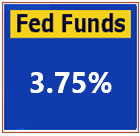
In the bond market, the Fed’s preferred recession indicator plunged to fresh lows in the past week, bolstering the case for those who believe the central bank will soon need to cut rates. The measure compares the current implied forward rate on Treasury bills 18 months from now with the current yield on a three-month Treasury bill. Pricing in futures markets shows investors betting that central bank easing later this year will drop the fed funds rate from 4.75% to 5% currently to around 4.3% by year-end. Yet projections from Fed policymakers show that most expect no rate cuts until 2024.In its most recent calculation, through the end of March, the New York Fed said the spread between 3-month and 10-year Treasurys are indicating about a 58% probability of recession in the next 12 months.
U.S. Treasury yields fell on Wednesday as traders sorted through recent readings on the labor market to gauge the possibility of a recession in the months ahead. The yield on the benchmark 10-year Treasury note slipped nearly 5 basis points to 3.289%, while the yield on the 2-year note fell 13 basis points to 3.702%. Yields move inversely to prices.
PMI Manufacturing Final
nnn
ISM Manufacturing
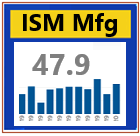
US manufacturing near three-year low; casts a shadow over economy. U.S. manufacturing activity slumped in March to the lowest level in nearly three years as new orders plunged, and analysts said activity could decline further due to tighter credit conditions. The Institute for Supply Management (ISM) survey on Monday showed all subcomponents of its manufacturing PMI below the 50 threshold for the first time since 2009. Some economists said this suggested a recession was around the corner, while others said much would depend on the services sector, whose PMI remains consistent with a growing economy. The survey made no direct comment on recent financial markets turmoil. Makers of miscellaneous products said they were "closely monitoring the global banking situation" but there were no impacts "at this time." The ISM's manufacturing PMI fell to 46.3 last month, the lowest level since May 2020, from 47.7 in February. Outside the COVID-19 pandemic, it was the weakest reading since mid-2009.
Construction Spending U.S. construction spending dipped in February as investment in single-family homebuilding maintained its downward trend amid higher mortgage costs. The Commerce Department said on Monday that construction spending slipped 0.1% in February after increasing 0.4% in January. Economists polled by Reuters had forecast construction spending would be unchanged. Construction spending increased 5.2% on a year-on-year basis in February. Spending on private construction projects was unchanged after gaining 0.2% in January.Investment in residential construction fell 0.6%, with spending on single-family housing projects plunging 1.8%. Outlays on multi-family housing projects rose 1.4%, continuing to be supported by demand for rental housing.
Factory Orders
U.S. Factory Orders Dropped 0.7% in February Month-to-Month. It followed a 2.1% decrease in January. New orders for manufactured goods totaled $536.4 billion in February 2023, down 0.7% from January 2023, according to data provided by the U.S. Census Bureau on April 4. The drop in factory orders, which are now down three of the past four months, follows a 2.1% decrease in January.
JOLTS
Job openings fell below 10 million in February for the first time in nearly two years, in a sign that the Federal Reserve’s efforts to slow the labor market may be having some impact Available positions totaled 9.93 million, a drop of 632,000 from January’s downwardly revised number, the Labor Department reported Tuesday in its monthly Job Openings and Labor Turnover Survey. Wall Street had been looking for 10.4 million, according to FactSet. It was the first time vacancies fell below 10 million since May 2021. The Fed has targeted the red-hot labor market in its quest to bring down inflation, which had been running at a 41-year high in the summer of 2022. The central bank has raised benchmark interest rates nine times since March 2022, but those moves had been appearing to have little impact on the jobs situation. Prior to the February data, job openings had been outnumbering available workers by nearly 2 to 1. The latest figures bring that ratio down to less than 1.7 to 1. Though the numbers run a month behind, the Fed watches the JOLTS data closely for signs of labor slack. Along with the decline in job openings, hires and separations also decreased slightly. Quits, a sign of labor confidence in the ability to switch jobs, rose by 146,000 to just over 4 million.
MBA Purchase Applications
nnn
ADP
Private sector hiring decelerated in March, flashing another potential sign that U.S. economic growth is heading for a sharp slowdown or recession, payroll processing firm ADP reported Wednesday. Company payrolls rose by just 145,000 for the month, down from an upwardly revised 261,000 in February and below the Dow Jones estimate for 210,000. That took first-quarter hiring to an average of just 175,000 jobs a month, down from 216,000 in the fourth quarter and a sharp reduction from the average of 397,000 in the first quarter of 2022. “Our March payroll data is one of several signals that the economy is slowing,” said ADP’s chief economist, Nela Richardson. “Employers are pulling back from a year of strong hiring and pay growth, after a three-month plateau, is inching down.” Annual pay rose at a 6.9% rate in March, down from 7.2% in February, according to the firm’s calculations.
International trade
nnn
PMI Composite
nnn
ISM Service
nnn
Jobless Claims
nnn.
Employment Payroll
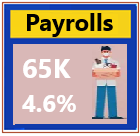
Nonfarm payrolls growth in March was about in line with expectations, but showed signs that the jobs picture is in the early stages of a slowdown. The Labor Department reported Friday that payrolls grew by 236,000 for the month, compared to the Dow Jones estimate for 238,000 and below the upwardly revised 326,000 in February. The unemployment rate ticked lower to 3.5%, against expectations that it would hold at 3.6%, with the decrease coming as labor force participation increased to its highest level since before the Covid pandemic. Though it was close to what economists had expected, the total was the lowest monthly gain since December 2020 and comes amid efforts from the Federal Reserve to slow labor demand in order to cool inflation. Along with the payroll gains came a 0.3% increase in average hourly earnings, pushing the 12-month increase to 4.2%, the lowest level since June 2021. The average work week edged lower to 34.4 hours.
Unemploymernt Rate
Nonfarm payrolls grew by 236,000 for March, compared to the Dow Jones estimate for 238,000 and below the upwardly revised 326,000 in February The unemployment rate ticked lower to 3.5% amid an increase in labor force participation, against expectations that it would hold at 3.6. Average hourly earnings rose 0.3%, pushing the 12-month increase to 4.2%, the lowest level since June 2021. The unemployment rate for Blacks tumbled 0.7 percentage points to a record low 5%.The unemployment rate ticked lower to 3.5%, against expectations that it would hold at 3.6%, with the decrease coming as labor force participation increased to its highest level since before the Covid pandemic.
Consumer Credit
mmmm
Fixed Mortgage Rates
nnnnn
|