10-Year Treasury Yield
U.S. Treasury yields fell on Tuesday as investors assessed the outlook for the economy ahead of fresh data due this week which could provide hints about the Federal Reserve’s next policy moves. At 5:28 a.m. ET, the yield on the 10-year Treasury was down by 7 basis points at 3.443%. The 2-year Treasury was last down by more than 8 basis points at 4.06%. Yields and prices have an inverted relationship and one basis point equals 0.01%.
PMI Mfg Final
Though a separate S&P Global survey showed manufacturing expanding for the first time in six months in April, factories continued to report hesitancy among customers to place orders because of higher prices and economic uncertainty. The ISM says a PMI reading below 48.7% over a period of time generally indicates the economy is in recession. The ISM said 73% of manufacturing gross domestic product was contracting, up from 70% in March. But it noted that fewer industries declined sharply. "The proportion of manufacturing GDP with a composite PMI calculation at or below 45 percent - a good barometer of overall manufacturing weakness - was 12 percent in April, compared to 25 percent in March," said Timothy Fiore, chair of the ISM Manufacturing Business Survey Committee.
ISM Mafg Index
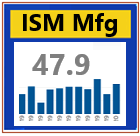
The ISM said its manufacturing PMI increased to 47.1 last month from 46.3 in March, which was the lowest reading since May 2020. Economists polled by Reuters had forecast 46.8. It was the sixth straight month that the PMI remained below 50, which indicates contraction. And activity could remain subdued as the ISM noted that customers' inventory levels "are now at the low end of the 'too high' level," and "likely not conducive to future output growth." Manufacturing PMI rises to 47.1 in April ISM said 73% of manufacturing GDP contracting New orders improve moderately; prices paid pick up
Construction Spending
nnn
Factory Orders
nnnuarter of last year. Quarter-on-quarter, the economy grew 2.2%.
JOLTS
U.S. job openings fell for a third straight month in March and layoffs increased to the highest level in more than two years, suggesting some softening in the labor market that could aid the Federal Reserve's fight against inflation. Still, the labor market remains tight, with the monthly Job Openings and Labor Turnover Survey, or JOLTS report, from the Labor Department on Tuesday showing 1.6 vacancies for every unemployed person in March. That compared to 1.7 in February. Fed officials, who started a two-day policy meeting on Tuesday, are closely watching this ratio. The U.S. central bank is expected to raise its benchmark overnight interest rate by another 25 basis points to the 5.00%-5.25% range on Wednesday before potentially pausing its fastest monetary policy tightening campaign since the 1980s. Job openings, a measure of labor demand, fell 384,000 to 9.59 million on the last day of March, the lowest level since April 2021, Data for February was revised higher to show 9.97 million job openings instead of the previously reported 9.93 million. Economists polled by Reuters had forecast 9.775 million job openings. Job openings have dropped by 1.6 million since December.
MBA Purchase Applications
nnn
ADP
Private payrolls surged by 296,000 in April, much higher than expected, ADP says. Private payrolls rose by 296,000 for April, above the downwardly revised 142,000 the previous month and well ahead of the estimate for 133,000. The fastest job growth in April came in leisure and hospitality with a gain of 154,000, followed by education and health services (69,000) and construction (53,000). The financial sector lost 28,000 jobs for the month. Manufacturing also took a hit, losing 38,000 jobs. Private payrolls rose by 296,000 for the month, above the downwardly revised 142,000 the previous month and well ahead of the Dow Jones estimate for 133,000. The gain was the highest monthly increase since July 2022. The surge comes despite Federal Reserve efforts to slow economic growth and in particular to tame a powerful labor market that has added more than 800,000 jobs this year by ADP’s count. An imbalance of demand over supply in the labor market has created strong wage gains that are reflected in persistent inflation pressures.
PMI Composite Final
The S&P Global US Composite PMI came in at 53.4 in April 2023, little-changed from the preliminary estimate of 53.5 and showing a solid upturn in private sector business activity that was the fastest since May 2022. The faster increase in activity was due to both the manufacturing and service sectors experiencing quicker growth. Despite a continued decline in new export orders, new business increased at a faster pace, and employment grew the most since July 2022. However, price pressures regained momentum in April, as input costs and output charges rose at sharper rates.
ISM Service
mmmm
FOMC Meeting
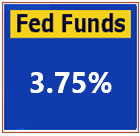
Fed increases rates a quarter point and signals a potential end to hikes. The Federal Reserve approved its 10th interest rate increase in just a little over a year and dropped a tentative hint that the current tightening cycle is at an end. The widely expected decision, which takes the fed funds rate to a target range of 5%-5.25%, was unanimous. The post-meeting statement omitted a sentence present in the previous statement saying that “the Committee anticipates that some additional policy firming may be appropriate” for the Fed to achieve its 2% inflation goal. The Federal Reserve on Wednesday approved its 10th interest rate increase in just a little over a year and dropped a tentative hint that the current tightening cycle is at an end. In a unanimous decision widely expected by markets, the central bank’s Federal Open Market Committee raised its benchmark borrowing rate by 0.25 percentage point. The rate sets what banks charge each other for overnight lending but feeds through to many consumer debt products such as mortgages, auto loans and credit cards. The Federal Reserve raised interest rates by a quarter of a point at the end of its two-day policy meeting. This 0.25 percentage point hike marks the 10th time the Fed has raised its benchmark interest rate over the past year or so, the fastest pace of tightening since the early 1980s. A wide range of borrowing costs — from mortgages and credit cards to auto loans and student debt — are affected by the rate increase.
Jobless Claims
nnnnn
Intal trade goos and Services
mmmm
Productivity and Cots Productivity and Costs in Q1 p 2023. Productivity growth underperforms (-2.7% vs. -1.8% Bloomberg consensus, q/q AR), while unit labor costs surprises on the upside (+6.3% vs. +5.5% consensus, 3.3% previous). Hours rose as output fell. Seemingly pretty bad news, but I think it’s useful to put these recent growth rates in context by looking at the levels.
Non Farmn Payroll
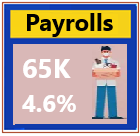
Broad-based gains across industries helped April nonfarm payroll data top economists’ expectations. Almost 1 in 4 of the new jobs were in health care and social assistance, which added about 64,200 in the month. Professional and business services saw the second-largest growth in April at 43,000, which is more jobs than it has added in an average month over the past half-year. Broad job gains across the economy helped the labor market show resilience in the face of a banking crisis and growing recessionary concerns. Nonfarm payrolls increased by 253,000 in April, according to data from the Bureau of Labor Statistics released Friday. That’s more than the Dow Jones estimate of 180,000. Friday’s data bolsters the argument that the labor market has remained idiosyncratically strong despite signs that the broader economy has slowed. Almost 1 in 4 of the new jobs were in health care and social assistance, which added about 64,200 in the month.
About 24,000 of those new jobs were in ambulatory services alone. Nursing and residential care facility payrolls rose by 9,000, while hospital payrolls increased by 7,000 from the prior month. Despite being the highest-growing sector compared with last month, health care still added fewer jobs than it has on average over the past six months. But the social assistance sector saw a larger increase than it has on average in that time period, helped by gains in the individual and family services sub-industry. April’s broad gains in some ways made up for drops seen in previous months for a handful of industries. Construction gained 15,000 jobs in April after losing 11,000 in March. Payrolls tied to financial activity jobs grew by 23,000 in April, more than erasing losses after shedding a modest 1,000 in the prior month.
Unemp0loymernt Rate
The U.S. unemployment rate inched down to 3.4% last month, according to the U.S. Bureau of Labor Statistics. The number not only marked a decrease from 3.5% in March, but it also tied for the lowest rate since 1969. Unemployment dipped sharply for Black workers, declining to 4.7% in April from 5% in the previous month. Similarly, the unemployment rate among Hispanic workers declined to 4.4% last month from 4.6%.
Consumer Credit
Just ovmmm
|