10-Year Treasury Yield
U.S. Treasury yields climbed on Monday as investors awaited the start of the Federal Reserve’s first meeting of the year on Tuesday and considered the outlook for the economy. The yield on the benchmark 10-year Treasury was up by three basis points to 3.551%. The 2-year Treasury yield was trading just over three basis points higher at 4.24%. Yields and prices move in opposite directions. One basis point equals 0.01%
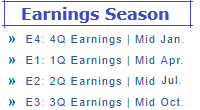
Earnings In earnings news, Exxon Mobil shares rose 2.2% after the oil major posted a $56 billion net profit for 2022, setting not only a company record but a historic high for the Western oil industry. United Parcel Service shares climbed 4.7% after its quarterly profit topped estimates, while General Motors Co (GM.N) shares jumped 8.3% after it forecast stronger-than-expected earnings for 2023. Caterpillar shares sank 3.5% as the machinery maker's fourth-quarter earnings slid by 29%. McDonald's shares dropped 1.3% after the burger chain warned inflation will weigh on margins in 2023. A busy week for markets will also include reports in coming days from Apple Inc (AAPL.O), Amazon.com Inc (AMZN.O) and Alphabet Inc (GOOGL.O), central bank meetings in Europe and the monthly U.S. employment report.
There are several tests this week for this 2023 rally. A busy stretch of corporate earnings season includes reports from McDonald’s and General Motors on Tuesday followed by tech giants Apple, Meta Platforms, Amazon and Alphabet later in the week.
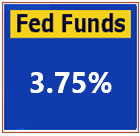
FOMC Begins Federal Reserve officials believe their effort to shrink the U.S. central bank's bond holdings is far from done, pushing back against some economists' idea that dwindling financial sector liquidity would bring the drawdown to a close in coming months. Instead, Fed officials reckon there remains a lot of liquidity, properly measured, for them to remove as part of their push to tighten financial conditions and bring down inflation. These officials also noted the Fed at some point could even lower short-term interest rates as it continues to draw down the roughly $8.5 trillion balance sheet, and that such a move would not be at odds with wider monetary policy.
Investors awaited the Fed’s next meeting, which will conclude with the central bank’s latest interest rate decision on Wednesday. Many are expecting the Fed to announce a 25 basis point increase then. That would be a further slowdown of the pace of rate hikes implemented by the Fed in its battle against inflation. Many investors have been hoping for this as concerns about the central bank leading the U.S. economy into a recession by increasing rates too much and too quickly have spread.The Federal Open Market Committee meets on Tuesday and Wednesday, when the Fed is expected to hike rates by one-quarter of a percentage point. Investors will be looking for clues about how much higher the central bank will take rates in the fight against inflation.
ECI
The ECI is viewed by policymakers as one of the better measures of labor market slack and a predictor of core inflation because it adjusts for composition and job-quality changes.Employment cost index rose 1% in Q3, slightly less than expected. Compensation costs for civilian workers increased at a slower pace in the fourth quarter, the Bureau of Labor Statistics reported Tuesday.The employment cost index, an important inflation gauge for the Federal Reserve, showed compensation increased 1% for the October-to-December period. That was a touch below the 1.1% estimate from Dow Jones. It also was lower than the 1.2% increase in the third quarter.On a 12-month basis, the ECI rose 5.1%, up slightly from the 5% gain in the third quarter..The employment cost index, which is an important measure of wages eyed by the Fed, showed compensation increased 1% in the fourth quarter. It was below the 1.1% estimate from Dow Jones. Traders widely expect a quarter-point increase in rates by the Fed, but they are hoping softening inflation will cause Chairman Jerome Powell to signal a pause in tightening in the near future.
Shiller
US home prices dropped for the fifth month in a row in November, as rising mortgage rates pushed prospective buyers out of the housing market late last year and prices continued to cool, according to the latest S&P CoreLogic Case-Shiller US National Home Price Index, released Tuesday. Last July marked the first month-over-month decrease for the national index since February 2012 and that continued through November, with seasonally adjusted prices falling 0.3% month over month. All cities in the 20-city index reported declines before seasonal adjustments. After seasonal adjustments, 19 cities still reported declines, with only Detroit increasing 0.1%. Mortgage rates fell throughout January, prompting more buyers to view properties and make offers. Inflation has begun to ease, boosting consumer confidence. Pending home sales improved in December and homebuilder confidence ticked up in January.
Homebuilders outperform during midday trading. Homebuilding stocks outperformed on the back of stronger-than-expected earnings results from PulteGroup. PulteGroup shares jumped more than 8% during midday trading on Tuesday. Meanwhile, Lennar shares added 3%, and D.R. Horton shares were up 2.8%.
FHFA
House prices fell 0.1 percent nationwide in November compared to October, according to the latest Federal Housing Finance Agency (FHFA) House Price Index (HPI®). House prices rose 8.2 percent from November 2021 to November 2022.
Chicago PMI
The Chicago PMI in the United States fell back to 44.3 points in January of 2023 from 44.9 in December and compared to market forecasts of 45. The reading pointed to a fifth consecutive month of contraction in business activity in the Chicago region. The Employment subindex ticked down by -0.6 points to a four-month low of 42.0 in January as one-quarter of firms reported lower employment levels. Labor shortages continue to hamper business activity and were reported by some firms as making up the greatest bottleneck to production. source: Institut
Consumer Confidence
Consumer confidence in the economy continues to waver, despite easing inflation. The Conference Board’s consumer confidence index — a closely watched metric gauging attitudes about the current and future strength of the economy — measured 107.1 in January, according to data released Tuesday by the business think tank. It was down from an upwardly revised 109 in December and below economists’ expectations. Economists were expecting the index to land at 109 in January, according to estimates on Refinitiv. The present situation index increased to 150.9 this month from 147.4 last month, according to the report, indicating that consumer confidence increased, with business conditions and jobs both being plentiful. But while consumers are starting 2023 feeling better about the current economic and labor market conditions, their confidence has waned about what’s to come in the next six months, said Ataman Ozyildirim, the Conference Board’s senior director of economics.
MBA Purchase Applications
After a stronger start to the year, mortgage demand plunged last week, despite another drop in interest rates. Total mortgage application volume fell 9% last week compared with the previous week, according to the Mortgage Bankers Association’s seasonally adjusted index. The average contract interest rate for 30-year fixed-rate mortgages with conforming loan balances ($726,200 or less) decreased to 6.19% from 6.20%, with points decreasing to 0.65 from 0.69 (including the origination fee) for loans with a 20% down payment. The rate was 3.78% the same week one year ago.Even with rates well off their recent highs, applications to refinance a home loan fell 7% for the week and were 80% lower than the same week one year ago. Homeowners may have jumped back briefly after the holiday lull, causing demand to rise over much of January, but overall there are still very few borrowers who can benefit from a refinance at today’s rates, so demand is now falling back again. Mortgage applications to buy a home fell 10% for the week and were 41% lower year over year. While both home prices and mortgage rates are coming down steadily, the supply of homes for sale is still quite low, and that may be keeping mortgage demand under pressure.
ADP
A third report showed private employment increased by 106,000 jobs last month after rising by 253,000 in December, well below economists' expectations for a gain of 178,000. The ADP National Employment report, however, attributed the weaker-than-expected private payrolls gain to bad weather in mid-January, including flooding in California.ADP says private payroll growth rose 106,000 in January, lower than expecte. Companies added fewer positions than expected in January, according to the ADP. Private payrolls rose by 106,000 in January, lower than the 190,000 estimate from the Dow Jones, as well as the 235,000 reported for December, the ADP said Wednesday.
PMI Composite Final
The S&P Global US Composite PMI improved to 46.6 in January 2023 from 45.0 in the previous month but still pointed to a seventh consecutive month of contraction in the private sector activity, a preliminary estimate showed. Activity in both service and manufacturing sectors fell at a slower pace, even as companies continued to highlight subdued customer demand and the impact of high inflation on client spending. New orders dropped the least for three months amid high inflation, rising interest rates and customer hesitancy, while employment rose marginally and backlogs of work decreased solidly. On the price front, input cost inflation quickened from December, bringing to an end a seven-month sequence of moderating rises, while the rate of output charge inflation was unchanged. Finally, business confidence strengthened to a four-month high, amid hopes of a resurgence in customer demand as 2023 progresses.
ISM Mfg Index
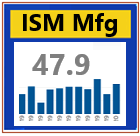
A separate report from the Institute for Supply Management (ISM) on Wednesday showed its manufacturing PMI dropped to 47.4 in January from 48.4 in December. The third straight monthly contraction pushed the index to the lowest level since May 2020 and below the 48.7 mark viewed as consistent with a recession in the broader economy.Manufacturing declined more than expected in January, ISM reading shows Manufacturing activity contracted again in January, even more than expected, according to the latest ISM survey.The manufacturing PMI for the month came in at 47.4%, representing the share of companies reporting expansion. That was below the 48.4% reading for December and less than the 48% Dow Jones estimate.Inventories and new orders registered monthly declines from December, while prices and new orders rose.
JOLTS
U.S. job openings unexpectedly rose in December, showing demand for labor remains strong despite higher interest rates and mounting fears of a recession, which could keep the Federal Reserve on its policy tightening path. There were 1.9 job openings for every unemployed person in December, the Labor Department's monthly Job Openings and Labor Turnover Survey, or JOLTS report, showed on Wednesday. Job openings, a measure of labor demand, increased by 572,000 to a five-month high of 11.0 million on the last day of December. Economists polled by Reuters had forecast 10.250 million job openings. That was reinforced by the JOLTS report, which showed layoffs climbing to 1.5 million in December from 1.4 million in November. The layoffs rate edged up to 1.0% from 0.9% in prior month. Workers also continued to voluntarily quit their jobs in December. The quits rates, which is viewed as a measure of labor market confidence, was unchanged at 2.7%.Job openings jumped in December to more than 11 million. Job openings surged in December despite the Federal Reserve’s efforts to cool the labor market, the Bureau of Labor Statistics reported Wednesday.There were just over 11 million openings for the month, up from 10.44 million in November and more than the 10.3 million FactSet estimate, according to the Job Openings and Labor Turnover Survey. Hires and separations also rose.There were 1.9 openings for every available worker in December.Quits, a measure of worker confidence to find new jobs, were little changed for the month near 4.1 million.
Construction Spending
mmm
FOMC
Stocks gained on Wednesday in an intraday turnaround as investors shook off a quarter-point rate hike from the Federal Reserve and instead focused on comments from Fed Chairman Jerome Powell that acknowledged falling inflation.The Federal Reserve on Wednesday raised its benchmark interest rate by a quarter percentage point and gave little indication it is nearing the end of this hiking cycle. Aligning with market expectations, the rate-setting Federal Open Market Committee boosted the federal funds rate by 0.25 percentage point. That takes it to a target range of 4.5%-4.75%, the highest since October 2007. The move marked the eighth increase in a process that began in March 2022. By itself, the funds rate sets what banks charge each other for overnight borrowing, but it also spills through to many consumer debt products. The Fed is targeting the hikes to bring down inflation that, despite recent signs of slowing, is still running near its highest level since the early 1980s.
Jobless
mmm
Productivity and Cost
mmm
Factory Orders
This report is mixed and if not for aircraft would be weak. The headline gain was a bit below expectations of 2.2%.Driven by aircraft, factory orders rose 1.8 percent in December, it was expected an increase of 2.2% with the second estimate for the durables half of this report unchanged from the first estimate's 5.6 percent surge. The first estiamte for nondurables is a fall of 1.9 percent, reflecting easing price pressues for oil-related goods.
Non Farm Payroll
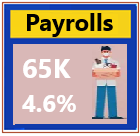
Jobs report shows increase of 517,000 in January, crushing estimates, as unemployment rate hit 53-year low. The January jobs report showed nonfarm payrolls increased by 517,000, far higher than the 187,000 market estimate. The unemployment rate fell to 3.4% versus the estimate for 3.6%. That is the lowest jobless level since May 1969. Leisure and hospitality added 128,000 jobs to lead all sectors. Other significant gainers were professional and business services (82,000), government (74,000) and health care (58,000). The employment picture started off 2023 on a stunningly strong note, with nonfarm payrolls posting their biggest gain since July 2022. Nonfarm payrolls increased by 517,000 for January, above the Dow Jones estimate of 187,000 and December’s gain of 260,000, according to a Labor Department report Friday.
Unemployment Rate
The unemployment rate fell to 3.4% versus the estimate for 3.6%. That is the lowest jobless level since May 1969. The labor force participation rate edged higher to 62.4%. A broader measure of unemployment that includes discouraged workers and those holding part-time jobs for economic reasons also edged higher to 6.6%. The household survey, which the Labor Department uses to compute the unemployment rate, showed an even bigger increase of 894,000.
PMI Composite Final
mmm
ISM Non-Mfg Index
mmm
Fixed Mortgeg Rates
mmm
|