10-Year Treasury Yield
U.S. Treasury yields were mostly lower Tuesday as investors looked to remarks from Federal Reserve officials for hints about upcoming monetary policy moves. The 10-year Treasury yield was last trading 6 basis points lower at 3.709%. The 2-year Treasury yield was last down 5 basis points at 4.672%. Yield and prices have an inverted relationship and one basis point equals 0.01%. Markets were closed Monday for the Juneteenth holiday.
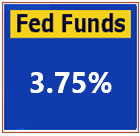
At its latest monetary policy meeting last week, the central bank left rates unchanged for the first time since March 2022. However, in guidance issued alongside the rate decision, Fed officials indicated that they are expecting to hike rates twice more this year, by 25 basis points each time.
ISM Manufacturing Index
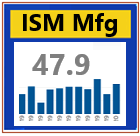
Economic activity in the manufacturing sector contracted in June for the eighth consecutive month following a 28-month period of growth. The June Manufacturing PMI® registered 46 percent, 0.9 percentage point lower than the 46.9 percent recorded in May. Regarding the overall economy, this figure indicates a seventh month of contraction after a 30-month period of expansion. The New Orders Index remained in contraction territory at 45.6 percent, 3 percentage points higher than the figure of 42.6 percent recorded in May. The Production Index reading of 46.7 percent is a 4.4-percentage point decrease compared to May's figure of 51.1 percent.
HMI Housing Market Index
A survey on Monday showed the National Association of Home Builders/Wells Fargo Housing Market index in June rose above the midpoint mark of 50 for the first time since July 2022 as a dearth of previously owned homes supported new construction. The index has rebounded by 77% since December. The latest reading was up 5 from last month to 55. This is the index's first positive reading (greater than 50) since July 2022 and is the sixth consecutive monthly increase. Builders are feeling cautiously optimistic about market conditions given low levels of existing home inventory and ongoing gradual improvements for supply chains. Consensus 50 and Actual 55.
Housing Starts
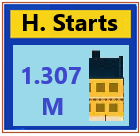
May U.S. housing starts beat expectations, with 1.63 million starts last month, according to the Census Bureau on Tuesday. That was higher than the 1.39 million housing starts expected by economists polled by Dow Jones. U.S. housing starts surge as builders rev up single-family home construction. Consensus 1.400 M and Actual 1.631 M.
Building Permits
Permits for future construction, for instance, rose 5.2% to the highest since October at 1.491 million units, led by a 27.1% surge in the Northeast. Permits for single-family projects rose 4.8% while multi-family were up 7.8%. Groundbreaking on U.S. single-family homebuilding projects surged in May by the most in more than three decades and permits for future construction also climbed, suggesting the housing market may be turning a corner after getting clobbered by Federal Reserve interest rate hikes.The U.S. also saw 1.49 million new building permits in May, higher than the forecasted 1.42 million.Building Permits. Consensus 1.433 Mand Actual 1.491 M.
MBA Purchase Applications
Weekly mortgage demand was flat, even as interest rates drop for the third straight week. Applications to refinance a home loan decreased 2% for the week and were 40% lower than the same week one year ago. Mortgage applications to purchase a home increased 2% for the week but were 32% lower than the same week a year ago. Homebuyers are starting to get used to higher interest rates, but the continued drop in new listings of homes for sale is keeping sales low. Federal Housing Administration demand rose more than conventional loan demand. Last week the average contract interest rate for 30-year fixed-rate mortgages with conforming loan balances ($726,200 or less) decreased to 6.73% from 6.77%. Applications to refinance a home loan fell 2% for the week and were 40% lower than the same week one year ago. Mortgage applications to purchase a home increased 2% for the week but were 32% lower than the same week a year ago.
Jobless Claims
Jobless claims jump in latest week to 261,000 — highest level since October 2021
FOMC Minutes
Fed sees more rate hikes ahead, but at a slower pace, meeting minutes show. Fed officials at their June meeting decided to hold off on raising interest rates, opting for a pause to assess the impact of 10 previous hikes. Minutes released Wednesday indicated disagreement among members, with some saying that rates should go higher as inflation remains elevated. Almost all Federal Reserve officials at their June meeting indicated further tightening is likely, if at a slower pace than the rapid-fire rate increases that had characterized monetary policy since early 2022, according to minutes released Wednesday.
Employment
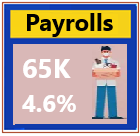
Payrolls rose by 209,000 in June, less than expected, as jobs growth wobbles.Nonfarm payrolls increased 209,000 in June, below the consensus estimate for 240,000. The unemployment rate was 3.6%, down 0.1 percentage point. However, a more encompassing jobless level rose to 6.9%. Government hiring led the job gains, followed by health care, social assistance and construction. Wages rose 4.4% from a year ago, slightly higher than expectations.
Exisitng Homes
U.S. existing-home prices register largest drop since December 2011
Leading Indicators
U.S. leading economic indicators fell in May for the 14th straight month.
PMI Composite Final
The S&P Global US Composite PMI was revised upward to 53.2 in June 2023 from the preliminary estimate of 53.0. However, it remained below May's reading of 54.3, indicating a solid but slower upturn in business activity. Service providers experienced a softer increase in output, while there was a renewed contraction in manufacturing production. New order growth slowed due to a continued decline in export orders, while employment saw a moderate increase. On the pricing front, cost pressures intensified, with a second consecutive fall in cost burdens among manufacturers being offset by the sharpest rise in service sector costs recorded since January. Output charges continued to rise at a strong rate, well above the pre-pandemic average.
Mortgage Rates
The average rate on the popular 30-year fixed mortgage has come down somewhat from last November's high above 7%. It averaged 6.77% in the latest week, according to data from the Mortgage Bankers Association.
|