10-Year Treasury Yield
The U.S. 10-year Treasury yield fluttered around 4% on Friday as investors assessed a key September inflation reading that came in cooler than expected. The release of the price report was delayed by the three-week-old federal government shutdown. The 10-year Treasury yield was up 1 basis point at 3.999%, while the 2-year Treasury note yield was little changed at 3.48%. The 30-year bond yield gained more than 1 basis point to 4.588%.
Leading Indicators
Delayed. The federal government has suspended all data compilation during the shutdown.
US Dollar Index
Though U.S. markets have rebounded to record highs since the spring, other top concerns from family offices remain, including around dollar depreciation and the private equity slowdown.
Crypto World Bitcoin
Bitcoin’s growing mainstream appeal has continued to spark bold price predictions, with some of crypto’s most vocal advocates calling for stratospheric valuations, but analysts disagree. BitMine Chairman Tom Lee believes Bitcoin could reach $1.6–$2 million if it matches gold’s total market capitalization. Michael Saylor predicts Bitcoin could hit $21 million within 21 years.
MBA Mortage Applications
The Market Composite Index, a measure of mortgage loan application volume, decreased 0.3 percent on a seasonally adjusted basis from one week earlier. On an unadjusted basis, the Index decreased 0.2 percent compared with the previous week. The Refinance Index increased 4 percent from the previous week and was 81 percent higher than the same week one year ago. The seasonally adjusted Purchase Index decreased 5 percent from one week earlier. The unadjusted Purchase Index decreased 5 percent compared with the previous week and was 20 percent higher than the same week one year ago.
EIA Crude Oil Report
The EIA Crude Oil stockpiles report is a weekly measure of the change in the number of barrels in stock of crude oil and its derivates, and it's released by the Energy Information Administration. This report tends to generate large price volatility, as oil prices impact on worldwide economies, affecting the most, commodity related currencies such as the Canadian dollar. Despite it has a limited impact among currencies, this report tends to affect the price of oil itself, and, therefore, had a more notorious impact on WTI crude futures.
Hedging Gold
Gold prices stabilized on Wednesday following the worst intraday drop in more than 12 years, but one of this year's hottest rallies remained largely on pause. Futures for the yellow metal flipped between negative and positive territory to hover near $4,120 per troy ounce after dropping 5.5% in the prior session as investors locked in profits and the US dollar strengthened.
Jobless Initial Claims
Delayed. The federal government has suspended all data compilation during the shutdown.
CFNAI
Delayed. The federal government has suspended all data compilation during the shutdown.
Existing Home Sales
Sales of previously occupied U.S. homes accelerated in September as declining mortgage rates and a pickup in available properties on the market encouraged home shoppers. Existing home sales rose 1.5% last month from August to a seasonally adjusted annual rate of 4.06 million units, the National Association of Realtors said Thursday. That’s the fastest sales pace since February.
Fed Balance Sheet
The Federal Reserve could signal the end of its years-long process of shrinking its balance sheet, also called quantitative tightening or QT, as soon as next week, at least two Wall Street banks suggest. It all depends on whether the central bankers see liquidity in the economy as slightly above "ample." Funding markets are experiencing "greater frictions," as illustrated by nearly zero overnight reverse repurchase facilities balances, strategists at J.P. Morgan observed in a note to clients.
Mortgage Rates
Unless the market has another trick in store next week, prospective October homebuyers will be treated to the lowest mortgage rates since pre-Halloween in 2024. The 30-year fixed-rate mortgage averaged 6.19% for the seven-day period ending Thursday, a decline of eight basis points from the prior week, according to Freddie Mac. The 15-year rate fell by the same amount, averaging 5.44%. Both the 30- and 15-year rates now sit at their lowest levels in more than a year. It was around this time last year that Treasury yields and mortgage rates spiked due to geopolitical tensions and the release of stronger-than-expected economic data, leading to a mid-January peak in borrowing costs.
CPI
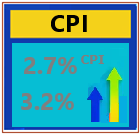
Inflation rate hit 3.0% in September, lower than expected, long-awaited CPI report shows. The consumer price index showed a 0.3% increase on the month, putting the annual inflation rate at 3%, both lower than expected. Excluding food and energy, core CPI showed a 0.2% monthly gain and an annual rate also at 3%, less than forecast. The Bureau of Labor Statistics released the data specifically because the Social Security Administration uses it as a benchmark for cost-of living adjustments in benefit checks. Otherwise
PMI Flash
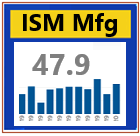
Flash US Manufacturing PMI: 52.2 (September: 52.0). 2-month high. US business activity growth accelerated in October to the second-fastest so far this year, according to early ‘flash’ PMI data, accompanied by the largest rise in new business seen in 2025 to date. Improvements in output and new work were recorded in manufacturing and services, though both sectors signaled falling exports. Factories also reported falling input buying amid a steep drop in backlogs of work and an unprecedented build-up of unsold stock.
New Home Sales
Delayed. The federal government has suspended all data compilation during the shutdown.
Consumer Sentiment
US consumer sentiment drops to a five-month low in October, according to the University of Michigan, falling to 53.6 from September's figures of 55.1. This comes after the long-awaited September Consumer Price Index (CPI) report, which showed that inflation was slowing. |