10-Year Treasury Yield
10-year Treasury yield slides as Trump tariffs take effect. The 10-year Treasury yield retreated on Tuesday as U.S. President Donald Trump’s tariffs on Canada, Mexico and China went into effect, escalating fears of a global trade war. The benchmark 10-year Treasury yield slipped more than 4 basis point to 4.136%. The 2-year Treasury yield slid nearly 10 basis points to 3.883%.
PMI Mfg Final
US February final S&P Global manufacturing PMI 52.7 vs 51.6 preliminary or Flash. There was some real optimism in January as prospects for the year ahead hit the highest in three years and that continued into February despite some turmoil around tariffs. However the comments in the report suggest the strength was driven by inventory building ahead of tariffs. A rise in the PMI to a 32-month high signals an improvement in the health of the manufacturing sector which may only be skin deep.
ISM Mfg Index
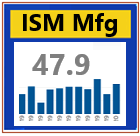
The Manufacturing PMI® registered 50.3 percent in February 2025, 0.6 percentage point lower compared to the 50.9 percent recorded in January 2025. The overall economy continued in expansion for the 58th month after one month of contraction in April 2020. - U.S. manufacturing was steady in February, but a measure of prices at the factory gate jumped to nearly a three-year high and it took longer for materials to be delivered, suggesting that tariffs on imports could soon undercut production. The ISM's manufacturing PMI slipped to 50.3 last month from 50.9 in January, which marked the first expansion since October 2022 and likely reflected factories front-loading imports to beat tariffs. A PMI reading above 50 indicates growth in the manufacturing sector, which accounts for 10.3% of the economy. Economists polled by Reuters had forecast the PMI would ease to 50.8.
Construction Spending
Total construction spending fell 0.2% in January 2025, according to a report released by the U.S. Census Bureau, with year-over-year spending up 3.3%. Monthly residential spending fell 0.5%, while non-residential rose 0.1% in the same time period. The decline in spending in January is likely to worsen, as uncertainty about tariffs, interest rates and inflation is causing investors and developers to delay or scale back projects.
US Dollar Index
mmmm
Crypto World - Bitcoin
Bitcoin is flat even after Trump officially establishes U.S. bitcoin reserve. Cryptocurrencies held steady early Friday following a decline the previous day on news of a U.S. strategic bitcoin reserve and crypto stockpile. Investors initially dumped their coins at the notion of the U.S. having no immediate planned purchases of bitcoin, per the order, against the backdrop of major weakness in equitie
MBA Mortgage Applications
Weekly mortgage demand surges 20% higher, after interest rates drop to the lowest since last year. Total mortgage application volume jumped 20.4% last week compared with the previous week, according to the Mortgage Bankers Association’s seasonally adjusted index. This was not only the first increase in three weeks, but it is an outsized weekly move. Total mortgage application volume jumped 20.4% last week compared with the previous week, according to the Mortgage Bankers Association’s seasonally adjusted index. This was not only the first increase in three weeks, but it is an outsized weekly move. Applications to refinance a home loan, which are most sensitive to weekly moves in interest rates, jumped 37% for the week and were 83% percent higher than the same week one year ago. While the vast majority of borrowers today still have loans with rates well below what is being offered today, more recent buyers from the last two years are now able to benefit from a refinance. Applications for a mortgage to purchase a home rose 9% for the week but were still just 2% higher than the same week one year ago.
ADP Employment Report
Private employers added just 77,000 jobs in February, far below expectations, ADP says. Private sector job creation slowed to a crawl in February, fueling concerns of an economic slowdown, payrolls processing firm ADP reported Wednesday. Companies added just 77,000 new workers for the month, well off the upwardly revised 186,000 in January and below the 148,000 Dow Jones consensus estimate, according to seasonally adjusted figures from ADP. The total was the smallest increase since July and comes at a time when worries are rising that economic growth is slowing and worries brew that President Donald Trump's tariff plans will spark another round of inflation. ADP said annual pay rose 4.7% in February, the same as the prior month.
PMI Services Index
mmmm
Factory Orders
mmmm
ISM Services Index
ISM services posts 53.5 reading, better than expected. Service-sector activity in the U.S. expanded at a solid pace in February, countering recent worries about an economic slowdown, the Institute for Supply Management reported Wednesday. The ISM services index posted a reading of 53.5, representing the share of businesses reporting expansion during the period. That was 0.7 points higher than the January level and better than the 52.9 forecast from the Dow Jones consensus. A reading above 50 indicates expansion.
Commodities - Oil
nnnnn
Beige Book
The Federal Reserve's so-called Beige Book, a compilation of anecdotes from across the central bank's 12 districts, on Wednesday showed that economic activity across the country rose "slightly," while inflation worries remained. US economic activity, employment edges up: Beige Book. Overall economic activity rose slightly since mid-January, according to the Federal Reserve Beige Book report released March 5. Employment nudged slightly higher on balance, with four districts reporting a slight increase, seven reporting no change and one reporting a slight decline. Multiple districts cited job growth in healthcare and finance, while employment declines were reported in manufacturing and information technology. Fed is 'in a difficult position'
Hedging Gold
mmmmm
Jobless Claims
mmmmm
US Trade Balanced
Trade deficit soars to record high in January 2025. The U.S. international trade deficit widened 34% in January to $131.4 billion, the Commerce Department said Thursday. It’s the widest deficit going back to the start of the series in 1992. Economists surveyed by The Wall Street Journal had predicted the deficit would widen to a seasonally adjusted $128.7 billion. U.S. trade gap widened by 34% in January
Fed Balance Sheet
Level $6.853 T. Total Assets -W/W $-33.472 B. Reserve Bank Credit - W/W $-20.940 B.
Mortgage Rates
Mortgage rates were clearly the culprit. The average contract interest rate for 30-year fixed-rate mortgages with conforming loan balances, $806,500 or less, decreased to 6.73% from 6.88%, with points falling to 0.60 from 0.61, including the origination fee, for loans with a 20% down payment. That is the lowest level since December 2024.
Non Farm Payroll
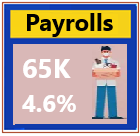
U.S. payroll growth totals 151,000 in February 2025, less than expected. Nonfarm payrolls increased by a seasonally adjusted 151,000 on the month, better than the downwardly revised 125,000 in January but less than the 170,000 consensus forecast. Nonfarm payrolls increased by a seasonally adjusted 151,000 on the month, better than the downwardly revised 125,000 in January but less than the 170,000 consensus forecast from Dow Jones, the Labor Department’s Bureau of Labor Statistics reported Friday.
Unemployment Rate
The unemployment rate edged higher to 4.1%. Average hourly earnings increased 0.3%, as expected, though the annual increase of 4% was a bit softer than the 4.2% forecast. The labor force participation rate slumped to 62.4%, its lowest level since January 2023, as the labor force declined by 385,000. A broader measure of unemployment that includes discouraged workers and those holding part-time positions for economic reasons jumped half a percentage point to 8%, its highest level since October 2021
Consumer Credit
Consumer credit increased 4.3% in January 2025. Consumer credit increased at a seasonally adjusted annual rate of 4.3% in January, the Federal Reserve reported. Nonrevolving debt — the category that includes auto loans and student loans — increased at an annual rate of 3%, while revolving debt, which includes credit cards, increased at an annual rate of 8.2%. The latest data on Consumer Credit in the United States has been released, revealing a surge to $18.08 billion. This figure, while significant indicating a stronger than expected consumer spending and confidence. However, the actual figure is considerably less than the previous record, which stood at a robust $40.8 billion.
S&P 500 Index - Week Performance
Open 2025 at 5,903.26 and close at 5,942.47. Positive 0.83%
Geopolitical Risk
With U.S. tariffs on Canada, Mexico and China in effect, Trump reportedly pausing military aid to Ukraine and European leaders committing to ramp up defense spending, analysts are expecting to see shifts in currency valuations. Geopolitical developments from just this month have seen U.S. tariffs on Canada, Mexico and China come into affect, President Donald Trump’s reported pause on military aid to Ukraine, softer U.S. economic data out of the U.S. and European leaders committing to ramp up defense spending. Trump announced that the sweeping 25% tariffs on imports from Mexico and Canada will go into effect March 4 and that China will be charged an additional 10% tariff on the same date. China has vowed to retaliate.
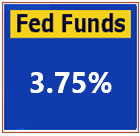
Powell says Fed is awaiting ‘greater clarity’ on Trump policies before making next move on rates.Federal Reserve Chairman Jerome Powell said Friday that the central bank can wait to see how President Donald Trump’s aggressive policy actions play out before it moves again on interest rates. “We do not need to be in a hurry, and are well positioned to wait for greater clarity,” the central bank chief said at a policy forum in New York.
President Donald Trump agreed to delay tariffs for one month on some vehicles built in North America after a call with the CEOs of General Motors and Ford. Germany’s DAX at record high day after best session since 2022; Autos gain on U.S. tariff exemption.
The yield on 10-year securities ended Friday little changed at 2.84%, after hitting the highest since 2023 on Thursday. With the rate up over 40 basis points this week — the biggest increase since the aftermath of the Berlin Wall’s fall — some bond strategists are now beginning to turn positive. The slide in Germany’s bonds, traditionally Europe’s safest, sparked a selloff across global debt markets this week after the nation announced a historic shift toward more public spending. While investors have long been clamoring for more issuance of the nation’s triple A securities, they have started to ask for higher returns to compensate for the expected boost in borrowing in coming years.
|