Reports Commentary
Housing: New-home sales fall 7% in December 2013
Sales of new single-family homes fell in December, but the whole of 2013 saw the highest sales level in five years, the government reported Monday.
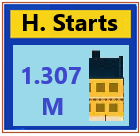
Sales of new single-family homes dropped 7% in December to a seasonally adjusted annual rate of 414,000, but were up 4.5% from a year earlier, the U.S. Commerce Department reported.
For all of 2013, new-home sales hit 428,000, the most since 2008. Despite growth over 2013, sales remain far below a peak rate of almost 1.4 million in 2005.
The median price of new homes rose 0.6% in December to $270,200. For 2013, the median price hit $265,800, up 8.4% from the prior year, the strongest annual growth since 2005. The supply of new homes on the U.S. market rose to 5 months in December at the current sales pace from 4.7 months in November.
The news out of housing keeps getting worse and worse. The latest bad news is a severe and much weaker-than-expected 8.7 percent decline in pending home sales for December. This points to a sharp decline ahead for what was already a very soft existing home sales market. All regions show similar declines in today's report.
This Week
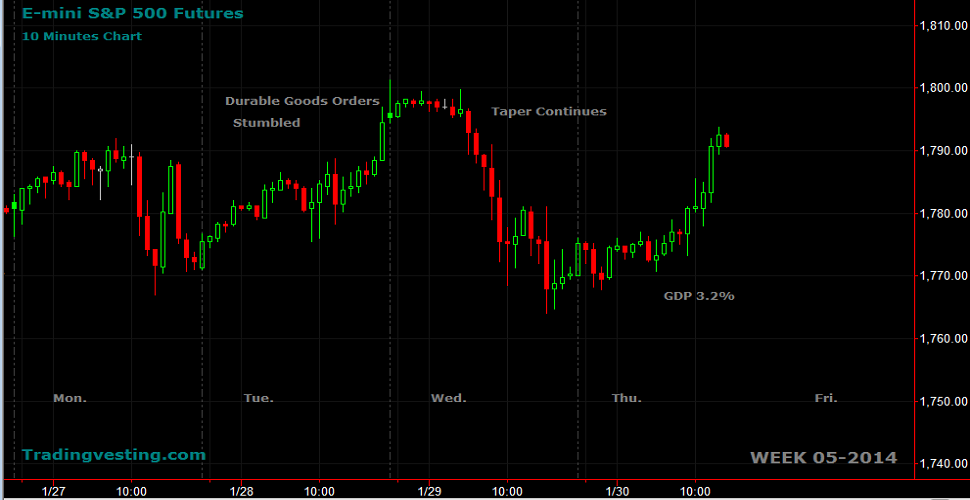
Indexes tested key technical levels adding to the steep losses from their worst week in over a year, after downbeat data from China and selloffs in emerging-markets currencies triggered a global flight from equities.
Investors will also focus on the Federal Reserve this week as the central bank will take center stage on Wednesday. Most observers expect the central bank to cut its bond-buying again, by about $10 million to $65 billion a month. Expectations of Fed tapering are among the reasons Wall Street suffered its worst weekly performance in more than a year last week.
In the news Tuesday was mixed economic news. In the plus column was a solid weekly Redbook weekly retail sales report along with gains in Consumer Confidence. In the minus column was a wickedly poor Durable Goods report.
Taper Continues
In a statement after a two-day meeting, Fed policymakers said the central bank will buy $65 billion a month in Treasury bonds and mortgage-backed securities, down from $75 billion. In December, Fed policymakers took their first step in tapering the program begun in September 2012, reducing the bond-buying from $85 billion a month.
GDP
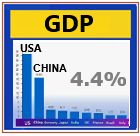
The U.S. government announced Thursday that the economy grew at a solid 3.2% pace in the third quarter, driven by strong consumer spending and exports. That figure beat economists' expectations, and although it's not indicative of gangbusters growth, the data seems to show the economy is moving forward modestly.
The U.S. economy expanded rapidly in the final quarter of 2013, the Commerce Department said on Thursday, as consumers shrugged off a government shutdown, with the data fueling hopes of even faster growth ahead. The gross domestic product grew at 3.2% annual pace, largely in line with expectations.
What do the Economic Reports reveal about the state of the economy?
New-home sales last year were best since recession but well below 2005 peak.
Sales of new single-family homes fell in December, but the whole of 2013 saw the highest sales level in five years, the government reported Monday. Sales of new single-family homes dropped 7% in December due to harsh winter weather. The median price of new homes ticked up in December and for 2013, the median price hit $265,800, up 8.4% from the prior year, the strongest annual growth since 2005.
|