Reports Commentary
Home Sales and Others
Consumer confidence slips in April, but revised March reading is best since 2008. U.S. home prices up 12.9% from year-ago figures: Case-Shiller. Twitter Inc (TWTR.N) on Tuesday reported better-than-expected quarterly revenue of $250 million (148 million pounds) , as its mobile ads drew more viewer responses.
Earnings
Earnings estimates have rebounded, however, as more companies have reported results. First-quarter profit growth for S&P 500 companies is seen at 3.7 percent, based on actual results and estimates for companies yet to report, compared with a forecast for 2.1 percent growth at the beginning of the month, Thomson Reuters data showed.
FOMC
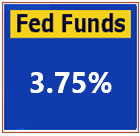
The Fed's two-day policy meeting began on Tuesday, with the central bank expected to again scale back its monthly bond purchase program. Investors will also be eager to get any guidance on when it might raise interest rates.
Data suggested the economy continued to gain momentum after the winter lull. U.S. consumer confidence dipped in April but remained near a six-year high, while home prices rose in February.
After a volatile month, ETF investing strategists expect the stock market to follow the seasonal "sell in May and go away" script as many technical indicators are warning that a sell-off lies ahead.
End of April
With just two days left in the month, the SPDR S&P 500 (SPY) was up 0.88% in April. PowerShares QQQ (QQQ), tracking the 100 largest non-financial stocks on the Nasdaq, was down 0.56%. SPDR Dow Jones Industrial Average (DIA) was ahead 0.92%.
IShares MSCI EAFE Index (EFA), tracking developed foreign markets, outpaced all major indexes, adding 1.2%. IShares MSCI Emerging Markets Index (EEM) was 0.66%.
Many technical indicators are flirting with levels seen at previous market peaks, foreshadowing a correction,
Furthermore, margin debt — the amount of money that investors have borrowed from their brokers — has reached an all-time high. Borrowers will eventually have to pay it back by selling their holdings.
The meltdown in copper suggests that the economy is weakening — a very bad omen for stocks. The red metal is known as the only one to have a Ph.D. in economics because of its widespread use in everything from consumer gadgets to construction.
Employment
U.S. economy gains 288,000 jobs in April. Unemployment rate drop 6.3% from 6.7%, lowest since fall 2008
U.S. job growth increased at its fastest pace in more than two years in April and the unemployment rate dived to a 5-1/2 year low of 6.3 percent, suggesting a sharp rebound in economic activity early in the second quarter.
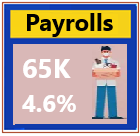
Nonfarm payrolls surged 288,000 last month, the Labor Department said on Friday. That was the largest gain since January 2012 and beat Wall Street's expectations for only a 210,000 increase.
The unemployment rate tumbled 0.4 percentage point, touching its lowest level since September 2008. The Labor Department attributed the decline to a drop in the number of unemployed people reentering the labor market as well as a fall in new entrants into the labor force.
The labor force participation rate, or the share of working-age Americans who are employed and unemployed but looking for a job, fell 0.4 percentage point to 62.8 percent. That was the lowest level since last December.
Workforce Participation at 36-Year Low as Jobs Climb
Even the strongest job growth in two years isn’t enough to entice more people into the labor force, one of the biggest conundrums of the U.S. economic expansion.
The share of the working-age population either employed or seeking a job declined in April for the first time this year, helping drive the unemployment rate down to 6.3 percent, the lowest since September 2008, Labor Department figures showed yesterday. At 62.8 percent, the so-called participation rate matches the lowest since March 1978.
A shrinking workforce saps the U.S. of the manpower needed to boost the expansion to a higher level, keeping the world’s largest economy merely plodding along. It also undercuts the theory that sustained growth alone will be enough to attract more Americans, from students to people discouraged over employment prospects, back into the hunt for jobs.
The decline in participation from 63.2 percent in March came as fewer Americans entered the work force, while the number of people who have given up the search for employment remained close to the average for the last year. There were 783,000 of these so-called discouraged workers in April, compared with 835,000 a year earlier. |