What is A Benchmark?
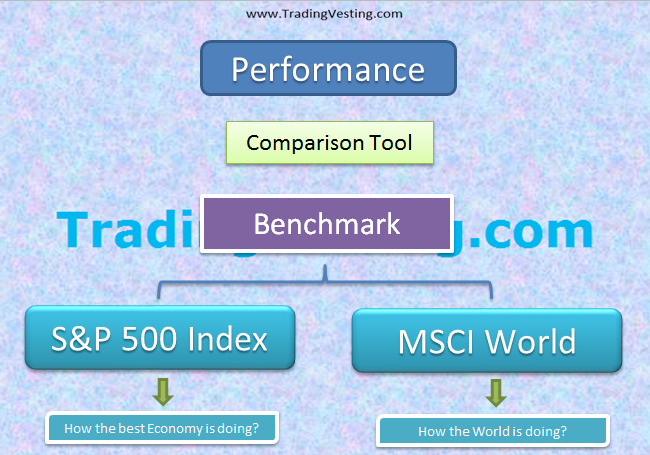
A benchmark keeps your portfolio in check. It is a comparison tool so that you can see how well you are performing against the market or another portfolio. Most investors benchmark their stock portfolio performance against the S&P 500. Because the stocks that make up the S&P 500 are broad in range, most investors will be able to use this index as a benchmark.
An index is a portfolio of a collection of assets that many people use as a benchmark because it attempts to follow closely the average performance of those assets. Another example would be the Dow Jones Industrial Average or the Barclays Aggregate Bond Index.
What Should I Use to Benchmark My Portfolio?
Because your portfolio may be different from others, you might want to know how to compare your performance to your peers. Are you investing in bonds? You might want to use the Barclays Aggregate Index. Are you primarily in Large Cap stocks? You might want to compete with the Russell 1000.
Performance Matters
Just like when you played sports you compared your performance to your peers, you should do the same with your portfolio. Then you will have a more accurate picture of how your portfolio's performance stacks up against the competition.
Since most investors are invested in a diversified portfolio of large, small, value and growth stocks in many industries, the S&P 500 is a good benchmark. In addition, S&P does a good job making all sorts of data about the index available at sites such as www.spglobal.com. You can use the portfolio feature at USATODAY.com to help you measure your portfolio's performance.
But, with that said, the S&P is not appropriate for all investors. If you have a large concentration of your portfolio in small stocks, you might want to compare your portfolio or a portion of it with the Russell 2000 index, which tracks small-cap stocks.
To help you decide what index is appropriate, you can find an actively managed mutual fund that is similar to your investment style. You can then look in that fund's prospectus to see what it is using for a benchmark. But above all, make sure you're comparing yourself to a close benchmark. Then, if you're not keeping up with the benchmark, you're falling behind, no matter what your absolute returns are |