Diversification
Diversifying your investments among different asset classes, such as stocks, bonds and money market securities, is the underpinning of modern portfolio theory. While supported by solid theory, asset allocation is also a common sense approach best described by the old saying 'Don't put all your eggs in one basket.'
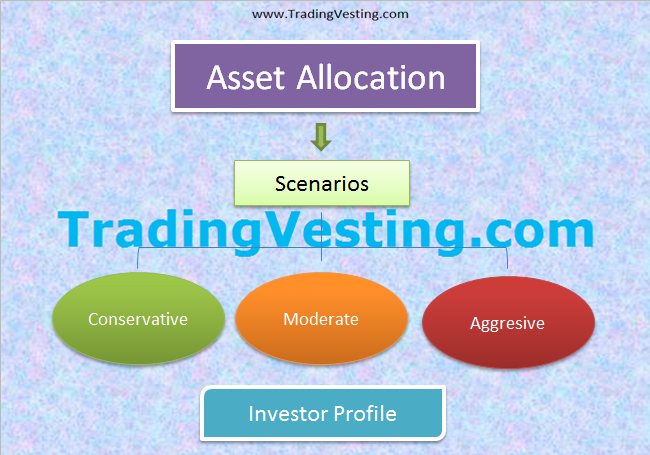
Asset allocation models provide a recipe for how to spread your investments among the various asset classes, depending on your investment objectivesAsset allocation models are generally classified in accordance with an investor’s chosen level of risk, and corresponding expected level of return – in other words, risk/return trade-off. For example, asset allocation models for conservative investors generally allocate a large percentage of the total portfolio to lower-risk securities such as fixed-income (bonds) and money market securities.
For these investors, protecting the value of their investment is typically of prime importance, while returns are secondary. Aggressive asset allocation models will consist almost entirely of equities, allowing for a greater return but also greater volatility or changes in value
Asset Allocation is the process of deciding what broad categories of investments to invest in, and then dividing up the money in your portfolio among them. These broad categories are called asset classes.
The four most common examples of asset classes are:
1. cash, 2. bonds, 3. U.S. stocks, and 4. stocks in other countries.
You can track our investment Portfolios Models and Asset Allocation in real time. We accomplish this by applying a professional understanding of the Markets that better interact with yout Investor Profile.
Your first step would be setting your Goals and Time Frame...
We work with investors to help them achieve their Portfolio through:
Research
Investors need high quality, in-depth research of markets and investment managers to help define best practice for success.
Specialization
Performance is optimized by using some of the world's best managers who have the ability to excel in their particular area of expertise.
Consistency
Investors are more likely to achieve their objectives if portfolios are structured to deliver consistent performance. Portfolios using multiple managers with complementary approaches diversify risk and have the ability to generate more consistent results — therefore greater potential success for the investor.
Process
Successful investment results from an ongoing, disciplined process that requires regular monitoring and periodic corrective action as conditions change.
If you are looking for broader portfolio diversification, we also offer alternative investments like trading systems
We do the research for you by analyzing factors that go far beyond performance to help determine a money manager's ability to produce consistent, long-term results.
Our unique approach is designed to help you save time, manage risk and improve overall results.
We believe investing is about achieving objectives. Investors desire comfort that their actions maximize their chances of meeting their investment objectives in a consistent manner.
|